Blog
2026/07/07 16:02
The Inherited Guide by Nozomu Mori. When looking at traditional Japanese woodcarvings, one question often comes to mind: Where did this design come from? Some designs were created by the artist. Others were inspired by famous sculptures or paintings. Still others have been quietly passed from one craftsman to another, taking on new forms while preserving their beauty. The relief presented here belongs to that tradition. At first glance, it depicts a charming child dressed in ancient armor. A sword hangs from the child's waist while one arm points confidently into the distance. The figure resembles a traditional Gosho doll, yet it is clearly something more. Its story begins with an old postcard preserved for decades in the Mori family's workshop. Gosho Ningyō originated in Kyoto during the Edo period (1603–1868). Rather than toys, they were elegant works of art exchanged within the Imperial Court and noble families to celebrate joyful occasions. With their rounded bodies, oversized heads, gentle expressions, and luminous white skin finished with gofun, they represent an idealized image of childhood in Japanese culture. For centuries they have inspired painters, sculptors, and craftsmen alike. The child in this relief, however, is unlike an ordinary Gosho doll. Instead of festive robes, this child wears ancient armor and carries a sword. Most striking of all, the child points toward the horizon. One possible explanation comes from Japanese mythology. The Yatagarasu, or Three-Legged Crow, is the sacred messenger said to have guided Emperor Jimmu, the legendary first Emperor of Japan. Rather than depicting the crow itself, the sculptor appears to have imagined Yatagarasu as a child dressed in ceremonial clothing. The gesture may symbolize the sacred guide leading Emperor Jimmu to his destination. No surviving document confirms this interpretation, but it fits the figure's title, costume, and pose remarkably well. For many years, the origin of this design remained unknown. The answer was found among the reference materials preserved in the Mori family's workshop. An old postcard depicted a Gosho doll titled "Yatagarasu Dōji (Gosho Doll)" by Noguchi Mitsuhiko, one of the leading Gosho doll artists of the Shōwa period. Like many traditional workshops, the Mori family preserved photographs and printed materials as inspiration for future work. This small postcard became the starting point for the relief shown here. In the difficult years after the Second World War, Hideo Mori (1897–1964), the father of Nozomu Mori, produced numerous carved wooden reliefs, many commissioned by a Kamakura-bori workshop. According to Nozomu Mori, his father selected suitable subjects and completely reimagined them for relief carving. One of those subjects was Noguchi Mitsuhiko's Yatagarasu Dōji. Rather than reproducing the Gosho doll itself, Hideo transformed the three-dimensional figure into a wall-mounted relief, redesigning its depth, composition, and sense of movement. It was not simply copying. It was the work of a master craftsman translating one artistic form into another. Most of Hideo's commissioned reliefs were delivered to clients and no longer remain with the Mori family. For that reason, Nozomu Mori's version preserves not only a beautiful design but also a workshop tradition inherited from his father. Nozomu Mori in his workshop. When I asked Nozomu Mori why he carved this relief, he smiled and answered with just a few words. "Because my father did." That simple reply reveals something essential about Japanese craftsmanship. Traditional workshops passed down knowledge not through books but by watching, helping, and working together every day. For Nozomu Mori, the Yatagarasu Child was never simply an old design. It was part of the workshop where he grew up. Today, originality is often regarded as the highest achievement in art. Traditional Japanese craftsmanship values something more. A beautiful design deserves to live on. This relief reflects that philosophy. Noguchi Mitsuhiko created a Gosho doll. Hideo Mori transformed it into a wooden relief. Years later, Nozomu Mori inherited his father's work and carved the same subject with his own understanding. The design remained recognizable, yet each generation gave it new life. That quiet renewal is one of the defining qualities of Japanese craftsmanship. Most of Hideo Mori's commissioned reliefs entered private collections decades ago. Very few remained with the Mori family. For that reason, Nozomu Mori's version carries special significance. It represents not only his own craftsmanship but also a workshop tradition inherited from his father. It is both a work of art and a record of a living tradition. Carved from carefully selected Japanese hardwood, The Inherited Guide reflects not only the timeless beauty of the traditional Gosho doll but also a remarkable story of craftsmanship passed from father to son. Inspired by a historic Gosho doll created by Noguchi Mitsuhiko and reinterpreted through the Mori family's woodcarving tradition, this relief demonstrates the Japanese belief that beautiful designs should be preserved, renewed, and handed down to future generations. Rather than simply reproducing the past, Nozomu Mori has transformed this inherited design into an original work that carries both history and individuality. Collectors seek beauty. They seek rarity. Above all, they seek authenticity. The Inherited Guide offers all three. More importantly, it preserves something that cannot easily be measured—a workshop tradition and a design carefully passed from father to son. It is more than a decorative wall relief. It is a living expression of Japan's woodcarving heritage. For photographs, dimensions, pricing, and purchasing information, please visit the product page below. Every relief is individually hand-carved. → View the ArtworkThe Inherited Guide
How a Gosho Doll Became a Wood Relief

What Is a Gosho Doll?

Yatagarasu Dōji (Gosho Doll) by Noguchi Mitsuhiko.
Vintage postcard preserved in the Mori family workshop.
Who Is the Yatagarasu Child?
An Old Postcard

Left: Nozomu Mori's wooden relief. Right: Noguchi Mitsuhiko's Yatagarasu Dōji Gosho doll (reference postcard preserved in the Mori family workshop).
Hideo Mori's Work
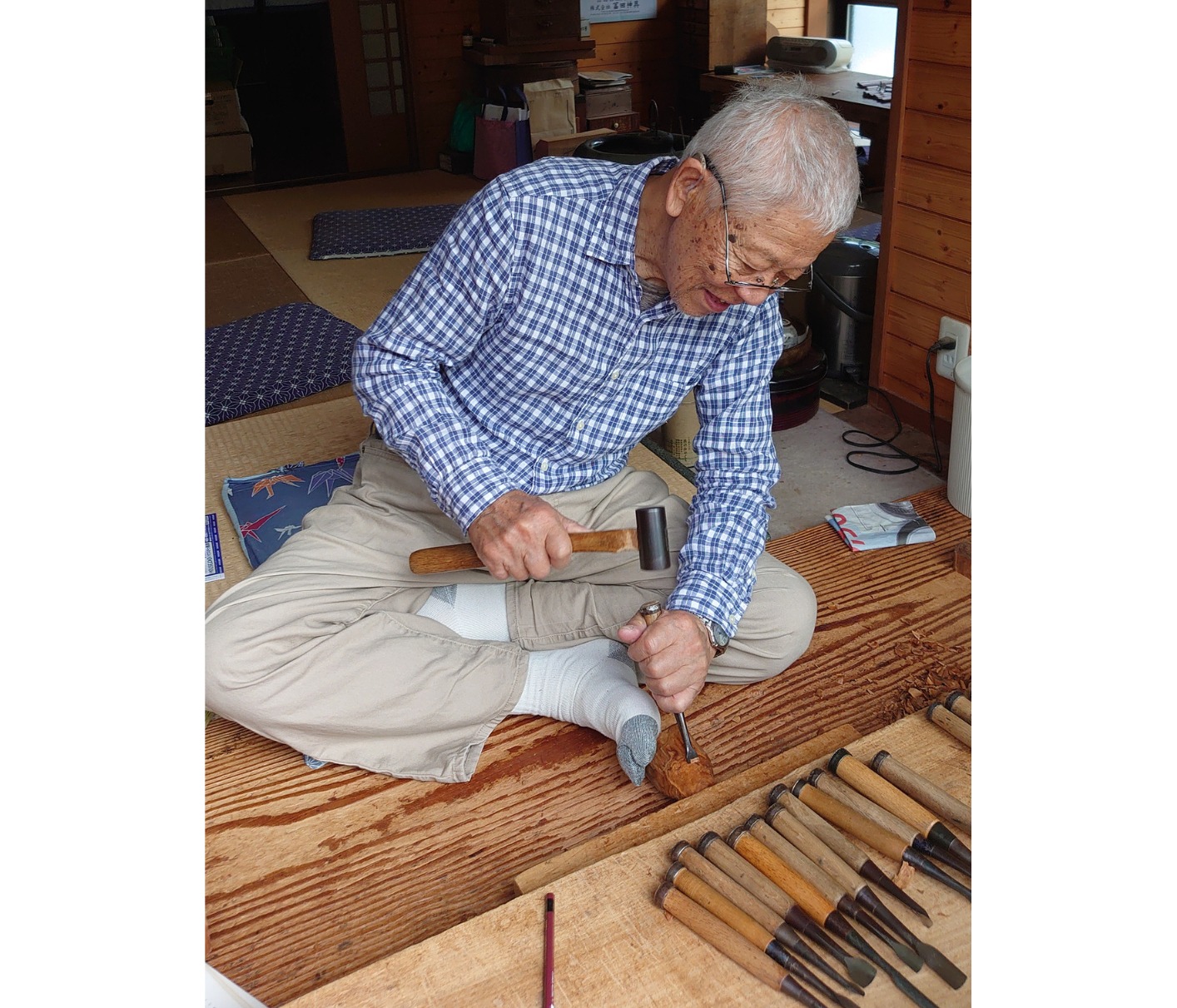
Because My Father Did
A Design Passed Down
A Rare Survivor
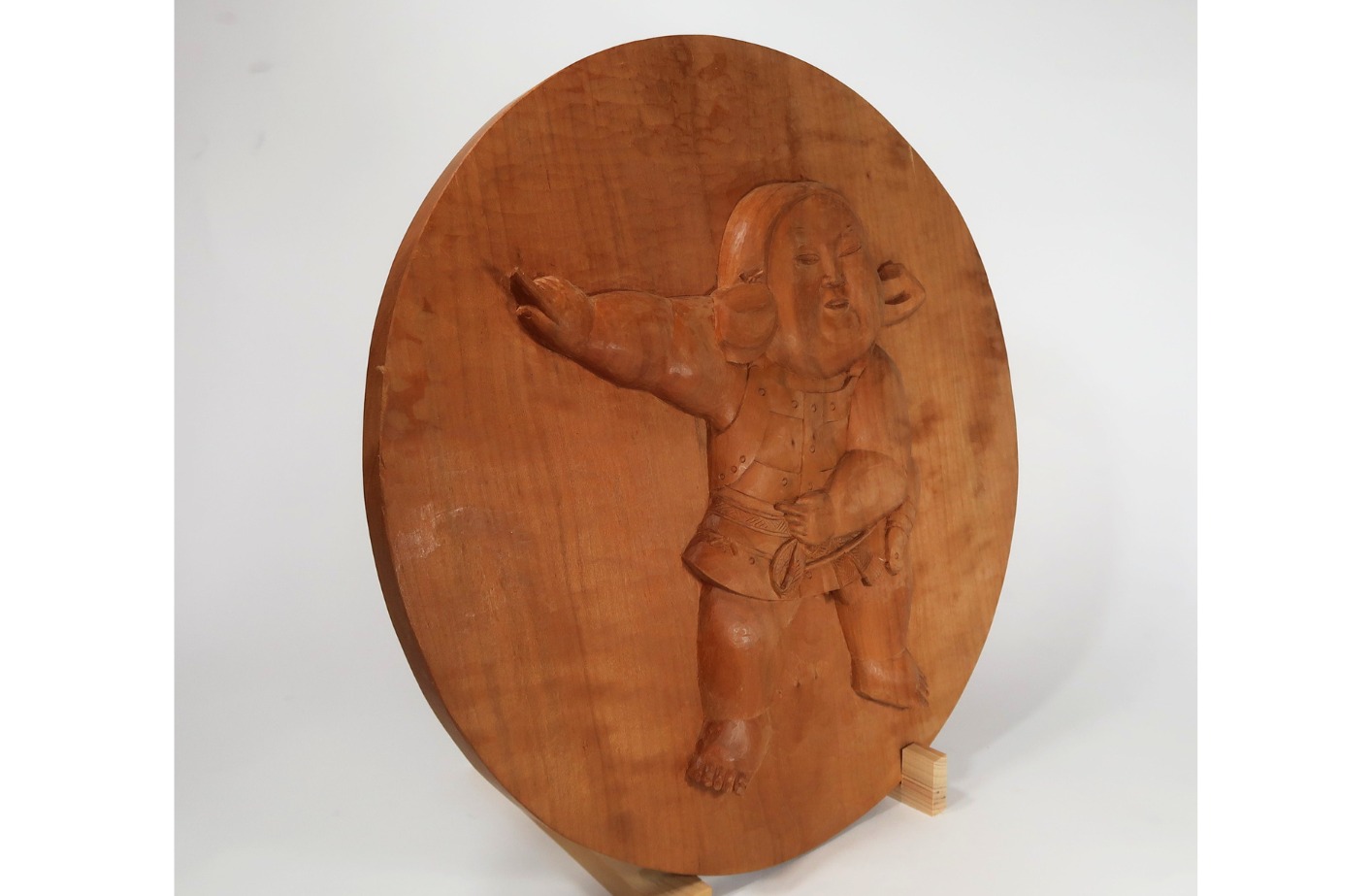
Hand-carved from Japanese hardwood.
Own The Inherited Guide

Related Reading