Blog
2026/07/05 14:03
An Original Openwork Relief by Nozomu Mori One of the first things people notice in a wood carving is the finished surface—the flowing branches, delicate leaves, and carefully carved details. What they rarely see is that the sculpture begins long before the first cut is made. For a traditional Japanese woodcarver, carving starts with drawing. Not simply drawing a picture, but designing a sculpture. Every branch, every leaf, every curve, and every opening must first be imagined, tested, and resolved on paper before a chisel ever touches the wood. This openwork relief, Green Maple and a Quiet Bird, reflects that process. Its quiet appearance is the result of decades of experience, careful planning, and a deep understanding of both nature and wood. Nozomu Mori has devoted more than seventy years to the art of Japanese woodcarving and continues to carve even today in his nineties. Throughout his career, he has worked primarily on temple and shrine carvings, Buddhist altars, ritual furnishings, and traditional architectural ornament. Such work requires far more than carving skill. It demands an understanding of structure, proportion, traditional techniques, and the unique character of wood itself. According to Nozomu Mori, decorative openwork reliefs such as this one were often created during quieter periods between temple commissions. While waiting for the next major project, he turned his attention from religious subjects to the changing beauty of Japan's seasons. Cherry blossoms, plum blossoms, pine, bamboo, maple, and many other plants became the subjects of these carvings. Although different from temple sculpture, they were created with exactly the same standards of craftsmanship. The tools, techniques, and standards remained the same. Only the subject matter changed. People often imagine that a woodcarver simply copies a drawing onto a piece of wood. Traditional Japanese woodcarving works very differently. According to Nozomu Mori, he always drew his own designs before beginning a carving. Some ideas may have been inspired by traditional paintings or by observing nature, but they were never copied directly. Instead, every composition was redesigned specifically for wood. A drawing for painting only needs to create the illusion of depth. A drawing for woodcarving must become a real three-dimensional object. Every branch must remain structurally sound. Every leaf must connect naturally. Every opening must be planned so that the finished relief remains both elegant and strong. As Mori drew, he was already carving the sculpture in his mind. He considered the direction of the grain, the depth of each cut, and how light would define the finished composition. His drawing was not simply an illustration. It was the blueprint for the sculpture. One of the greatest challenges in openwork carving is balancing natural beauty with structural strength. If a branch is carved exactly as it appears in nature, it may become too thin and break. If too much wood is left behind, however, the relief loses its lightness and rhythm. Finding the right balance begins in the drawing. Before carving starts, the woodcarver decides where branches should remain slightly thicker, where leaves should overlap to strengthen the composition, and how open spaces can be created without weakening the structure. Most viewers never notice these decisions. They simply experience a composition that feels natural. Yet that natural appearance is the result of careful planning developed through decades of professional experience. For a traditional woodcarver, the drawing is not merely a sketch. It is the first stage of the carving itself. Outside Japan, maple trees are most often associated with autumn. In Japan, however, they are admired throughout the year. The fresh green leaves of early summer—known as ao-momiji—have inspired poets, painters, gardeners, and craftsmen for centuries. Their beauty is quiet rather than dramatic. Soft sunlight filtering through young leaves creates a calm atmosphere that has long been appreciated in temple gardens and traditional landscapes. Instead of celebrating the brilliant colours of autumn, Nozomu Mori chose to express the peaceful beauty of early summer. The result is more than a carving of a maple tree. It is a reflection of a seasonal beauty deeply rooted in Japanese culture. This relief was carved when Nozomu Mori was around fifty years old. By then, he had already spent decades creating carvings for temples, shrines, Buddhist altars, and traditional architecture. According to Mori himself, works like this were created during quieter periods between major commissions. This relief is one of the seasonal openwork carvings he created during this period of his career. Created after decades of professional experience, it reflects the confidence and technical refinement developed through years of continuous craftsmanship. At first glance, the relief seems simple. A maple branch extends naturally across a circular frame while a single bird rests quietly among the leaves. The composition feels balanced without appearing symmetrical. The circular frame suggests looking through a window into a peaceful garden. The branch guides the eye naturally across the composition, while the bird quietly completes the scene without becoming its focus. Nothing feels crowded. Nothing feels unnecessary. This quiet balance is one of the defining qualities of the work. Openwork carving is defined not only by the wood that remains, but also by the spaces intentionally left open. These openings give the composition a sense of lightness and rhythm. Every branch supports the next. Every opening is carefully planned before carving begins. The balance between solid wood and open space is one of the defining characteristics of traditional Japanese openwork carving. A Quiet Work of Seasonal Woodcarving This relief is a quiet work of seasonal woodcarving, depicting early summer maple leaves and a single bird. It reflects a mature stage in Mori's career, when decades of professional experience had already shaped his approach to woodcarving. The skills and design sense developed through temple carving are reflected in its balanced composition and careful use of wood and open space. Mori continued carving afterward and still works today in his nineties. Its quiet character reveals itself gradually to those who take the time to look closely. For detailed photographs, dimensions, and purchasing information, please visit the product page below. → View the ArtworkFrom Sketch to Sculpture
How Nozomu Mori Transforms Nature into Wood

Green Maple and a Quiet Bird

Nozomu Mori at work in his workshop, continuing a lifetime devoted to traditional Japanese woodcarving.
A Lifetime Devoted to Woodcarving
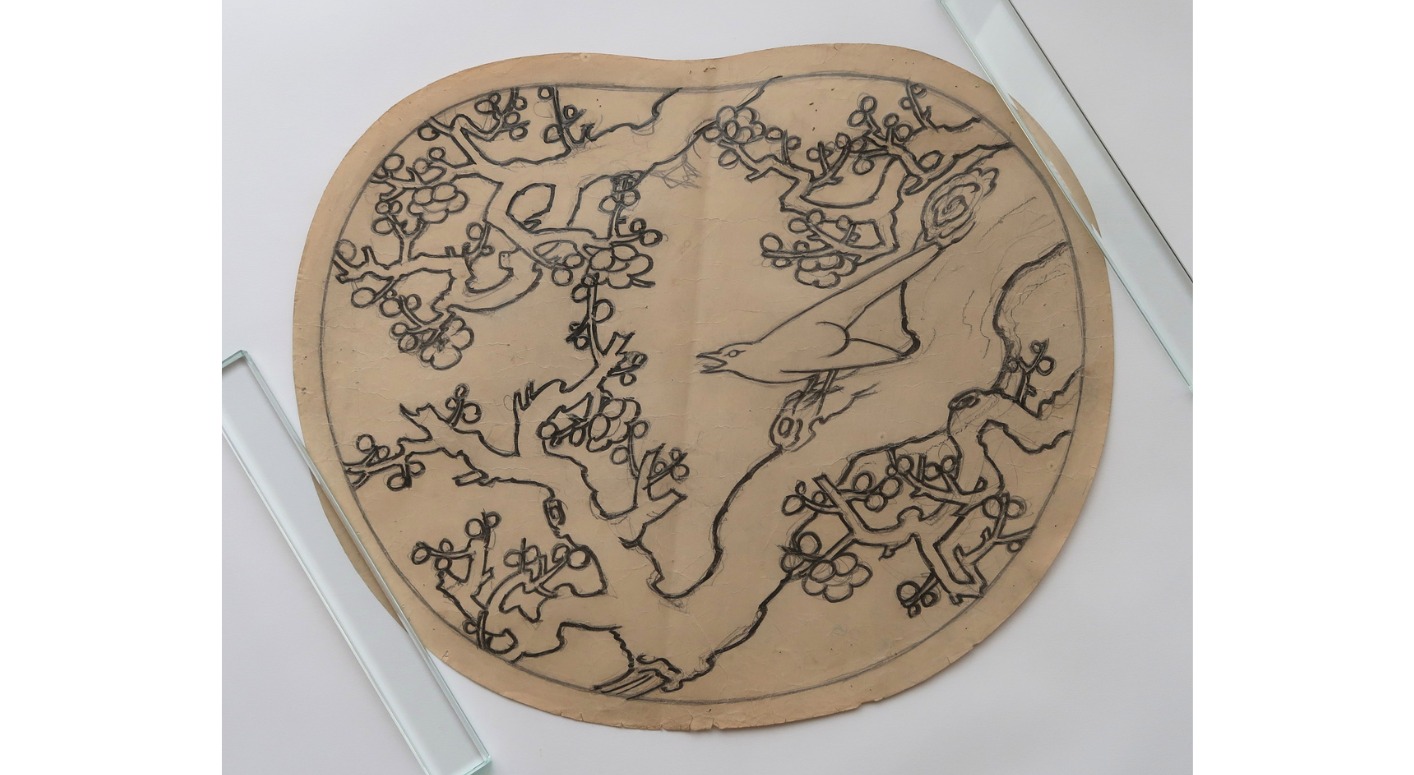
Design sketch by Hideo Mori. The Mori family traditionally developed original drawings before beginning a wood carving. These sketches served as working blueprints rather than finished illustrations.
Designing for Wood
Balancing Beauty and Strength

Fresh green maple (ao-momiji) in early summer has long been admired in Japanese gardens and temple landscapes.
Green Maple in Japanese Culture
About This Relief
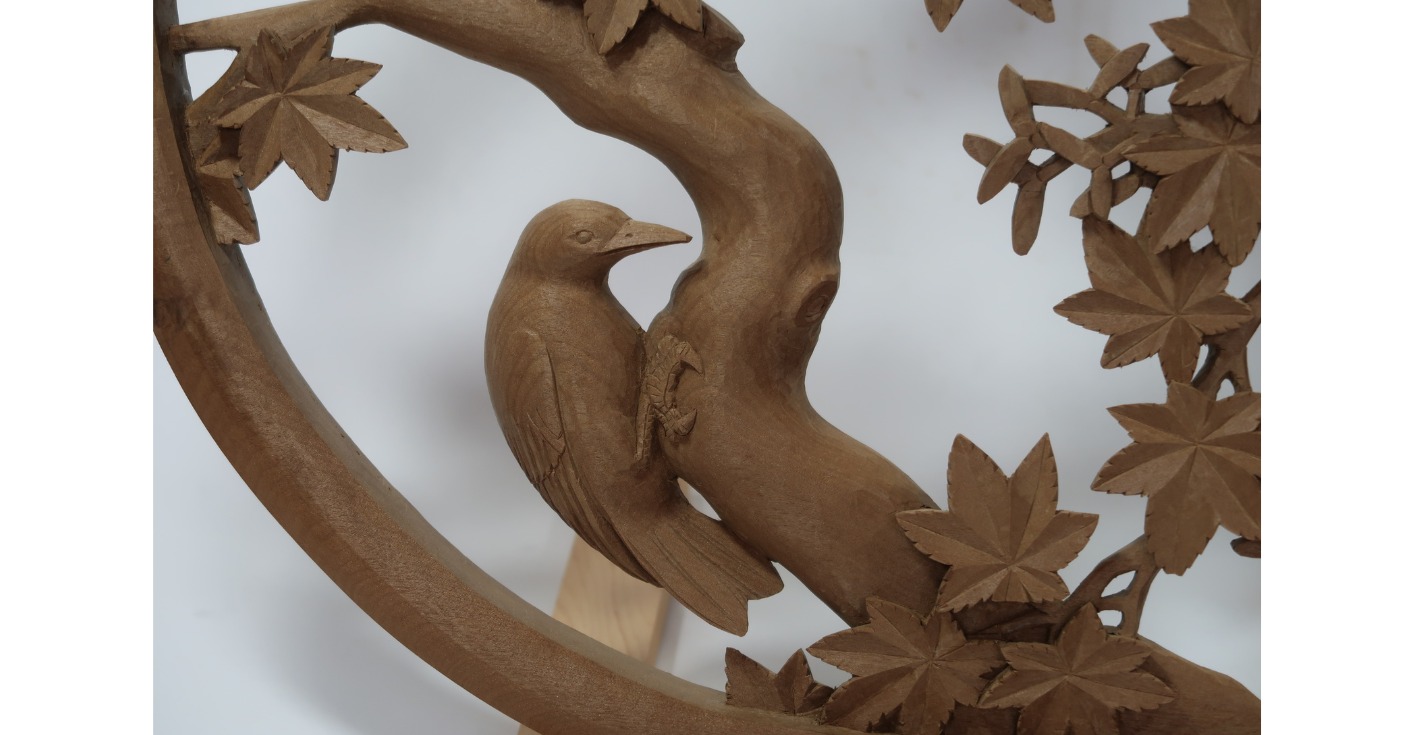
A Composition That Appears Effortless
Creating Space as Part of the Design
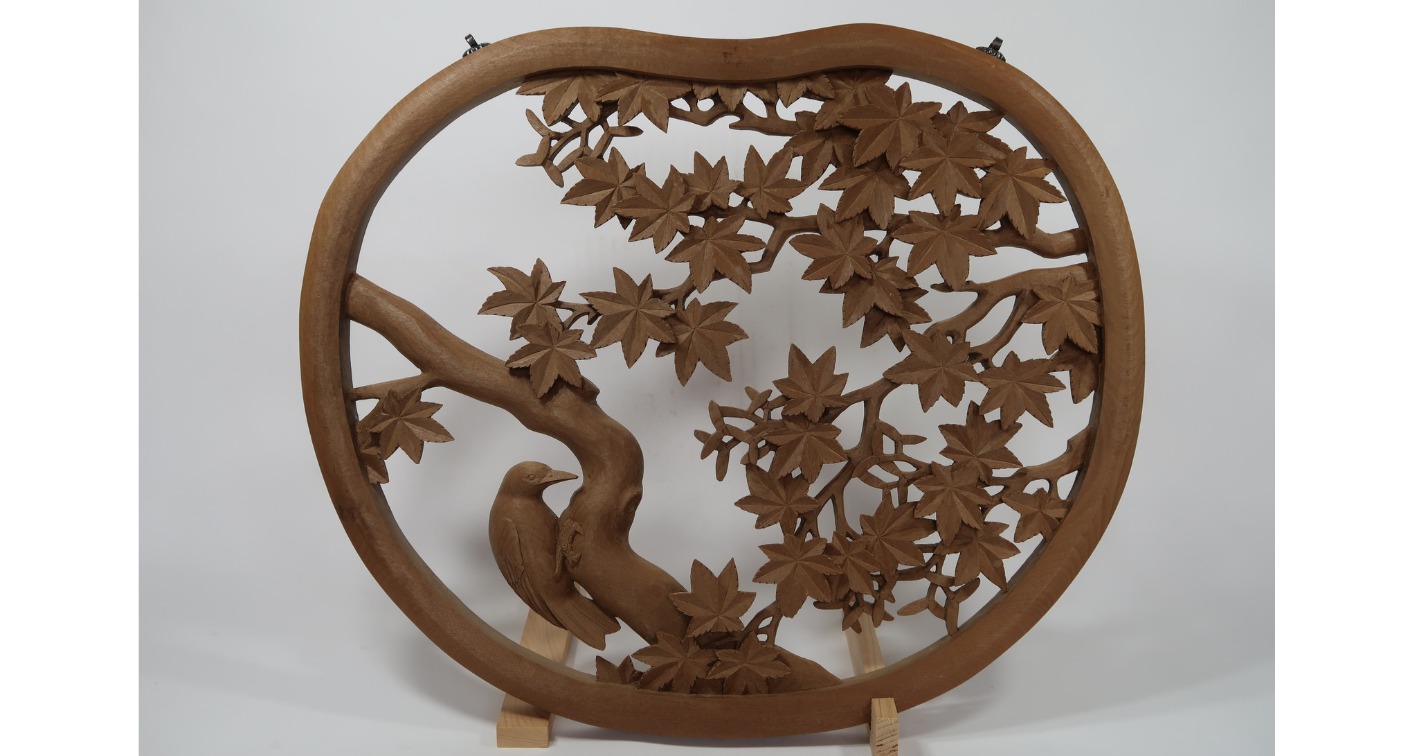
Discover This Original Openwork Relief by Nozomu Mori
Related Reading