Blog
2026/06/27 19:11
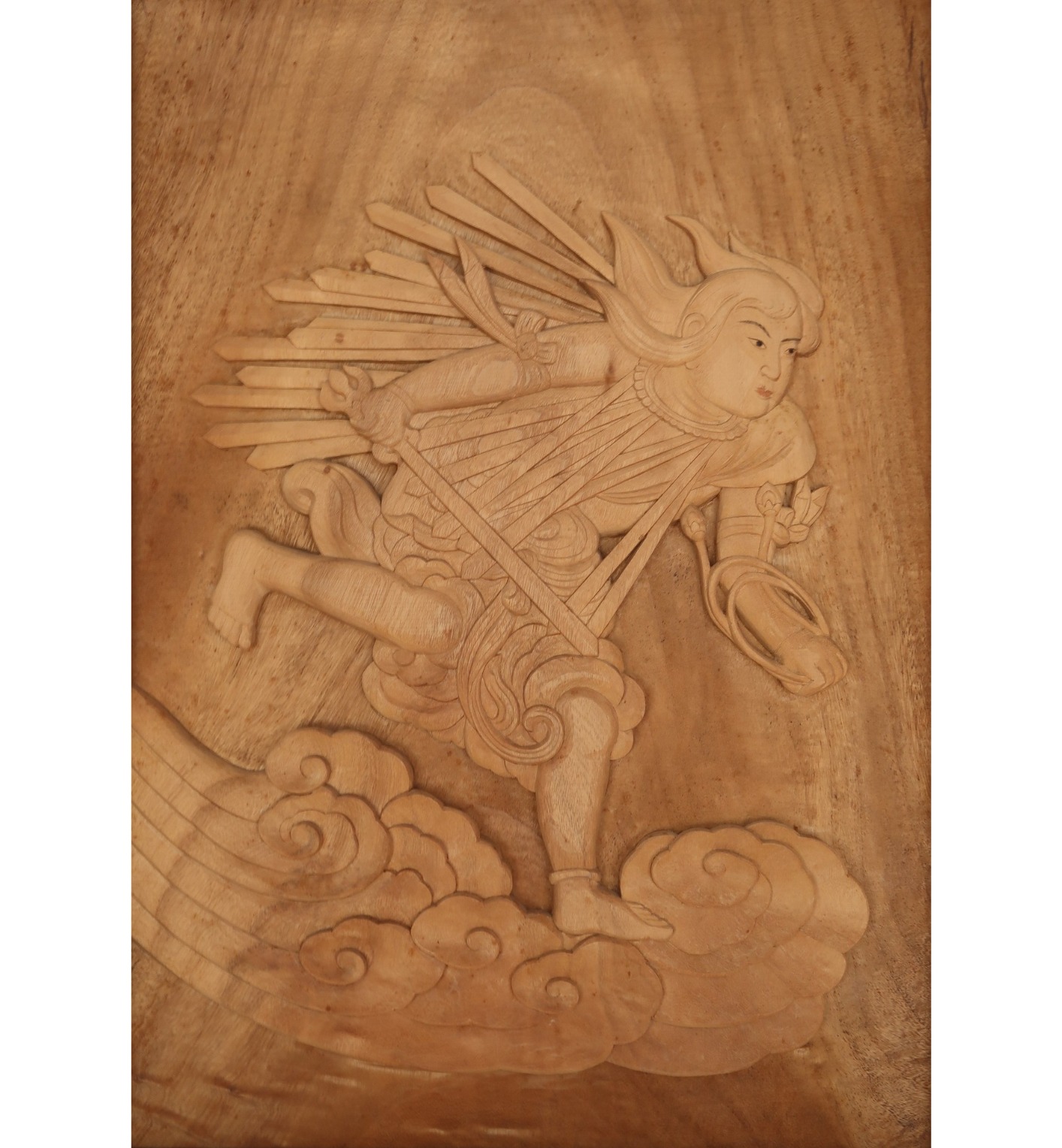
Ken no Gohō relief by Tessō Mori, carved approximately twenty-five years ago. Among the countless Buddhist figures found throughout Japan, few are as astonishing as Ken no Gohō—the Sword-Clad Guardian. Unlike the serene Buddhas or compassionate Bodhisattvas familiar to many people around the world, this mysterious guardian races through the sky covered with countless swords. His appearance is unlike anything found in Western religious art. Half guardian spirit. Half heavenly warrior. Entirely unique. For nearly one thousand years, this extraordinary figure has fascinated monks, artists, historians, and lovers of Japanese art. About twenty-five years ago, master woodcarver Tessō Mori created his own original relief inspired by this legendary guardian. To understand why, we first need to travel back to one of Japan's greatest illustrated stories. The story of Ken no Gohō appears in one of Japan's greatest artistic treasures: The Shigisan Engi Emaki (Legends of Mount Shigi Scrolls). Created during the late Heian period (12th century), these handscrolls are designated as a Japanese National Treasure and are widely regarded as masterpieces of narrative painting. Rather than depicting famous battles or emperors, the scroll tells miraculous stories surrounding the monk Myōren, who lived at Chōgosonshi-ji Temple on Mount Shigi in present-day Nara Prefecture. Filled with humor, dramatic movement, and supernatural events, the scrolls remain among the most celebrated works in Japanese art history. One episode introduces a guardian unlike any other. Myōren was known as a devoted worshipper of Bishamonten, the Buddhist guardian deity of protection and victory. One day, Emperor Daigo became gravely ill. Imperial messengers hurried to Mount Shigi, asking Myōren to come to Kyoto and pray for the emperor. Surprisingly, the monk refused to leave the mountain. Instead, he said he would send someone else. Not a human. A guardian spirit. That guardian was Ken no Gohō. As the most powerful guardian serving Bishamonten, he answered Myōren's prayers and set out for the Imperial Palace. Ken no Gohō flying through the sky in the Shigisan Engi Emaki. As Myōren prayed, a brilliant guardian suddenly appeared. Covered entirely with swords that formed both armor and wings, he soared through the sky from Mount Shigi toward the Imperial Palace in Kyoto. The scroll captures this moment with astonishing energy. His body twists through the air. Clouds swirl beneath him. His swords radiate outward like feathers. Even after nearly nine centuries, the image remains remarkably dynamic. It is one of the most memorable flying scenes in Japanese narrative painting — almost like a medieval Japanese superhero appearing in a sacred story. When the guardian arrived above the palace, he revealed his miraculous power. The emperor's illness disappeared almost immediately. The court rejoiced. The emperor wished to reward Myōren with wealth and honors. Yet Myōren accepted nothing. His refusal demonstrated that spiritual power was never meant to be exchanged for worldly gain. This episode established Mount Shigi as one of Japan's great sacred sites and transformed Ken no Gohō into one of the most unforgettable supernatural figures in Japanese art. At first glance, the swords appear aggressive. In Buddhist symbolism, however, they represent something very different. The sword cuts through ignorance. It protects practitioners. It destroys illusion rather than people. By clothing the guardian entirely in swords, medieval artists expressed the overwhelming protective power of Buddhist wisdom. Rather than being an instrument of violence, every blade symbolizes spiritual protection. This combination of dynamic movement and profound symbolism makes Ken no Gohō unlike any other figure in Buddhist art. About twenty-five years ago, Tessō Mori created this original wood relief. His interest in the subject did not arise by chance. Before carving Ken no Gohō, Mori had already sculpted Bishamonten, the guardian deity whom Ken no Gohō serves. While studying and carving Bishamonten, he became increasingly fascinated by this extraordinary messenger. There was another reason as well. Years earlier, Mori's father, the master woodcarver Hideo Mori, had created a relief of Ken no Gohō. After his father's passing, Tessō is believed to have seen Hideo's original sketches of the guardian. Those drawings may have inspired him to carve the subject himself. Perhaps because Ken no Gohō serves Bishamonten... Perhaps because of his father's earlier work and sketches... Or perhaps simply because the guardian's dramatic appearance inspired him as an artist... Tessō Mori decided to carve his own interpretation. Rather than copying the medieval painting exactly, he transformed its flowing movement into wood, emphasizing the energy of flight while preserving the graceful rhythm characteristic of traditional Japanese woodcarving. The appeal of Ken no Gohō lies not only in his dramatic appearance. He represents an idea deeply rooted in Japanese Buddhism. Invisible protection. Swift compassion. Power used only for the benefit of others. These ideals explain why this unusual guardian has remained beloved for nearly a thousand years. Even today, his image continues to inspire artists who appreciate the balance between strength and spirituality. The original scroll expresses movement through brush and ink. Woodcarving presents an entirely different challenge. In this relief, Tessō Mori translated the vitality of the ancient scroll into the warmth and presence of carved wood. It is not a reproduction. It is an original interpretation created by Tessō Mori through his own artistic vision. The Sword-Clad Guardian remains one of the most extraordinary figures in Japanese religious art. This relief reflects not only a famous medieval legend but also a family tradition of woodcarving passed from one generation to the next. Discover this original work by Tessō Mori and experience the enduring beauty of traditional Japanese woodcarving. 【View Artwork】 From the Yakushi-ji Suien to Contemporary Living-Tessō Mori's Original InterpretationThe Sword-Clad Guardian
Ken no Gohō — Japan's Flying Supernatural Protector
A Warrior Covered in Swords
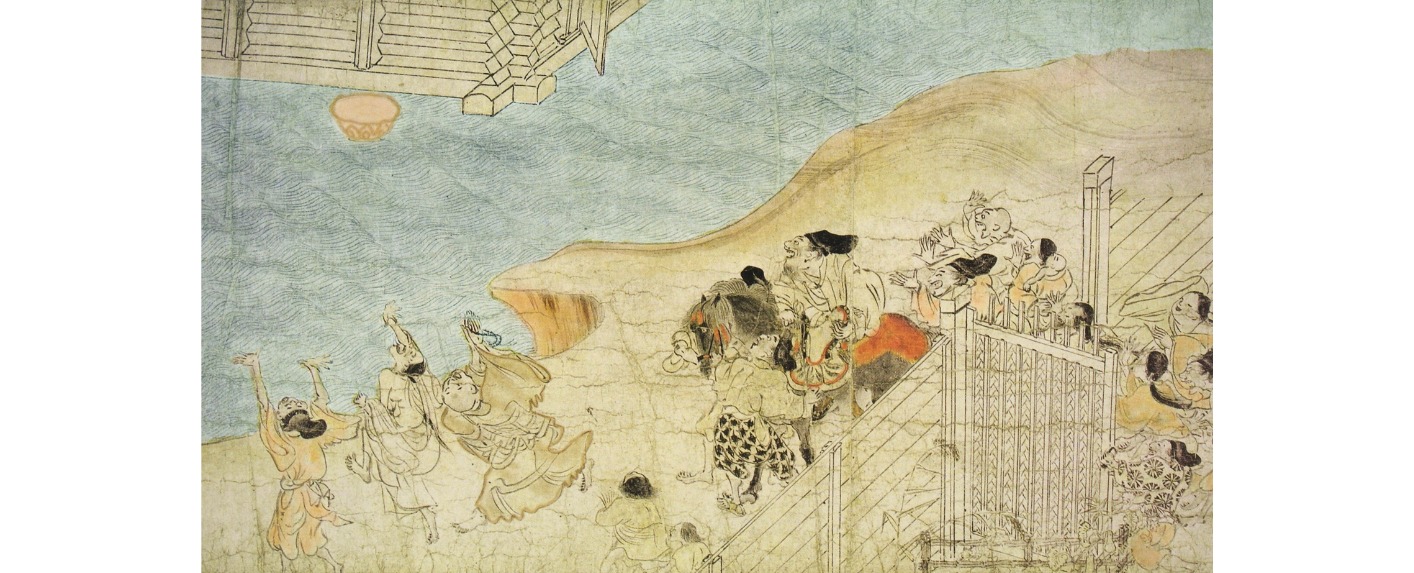
The Shigisan Engi Emaki, a National Treasure of Japan, preserves miraculous stories of the monk Myōren.
The Legendary Scroll of Shigisan Engi
The Messenger of Bishamonten

A Flight Across the Sky
Healing the Emperor
Why Is He Covered with Swords?
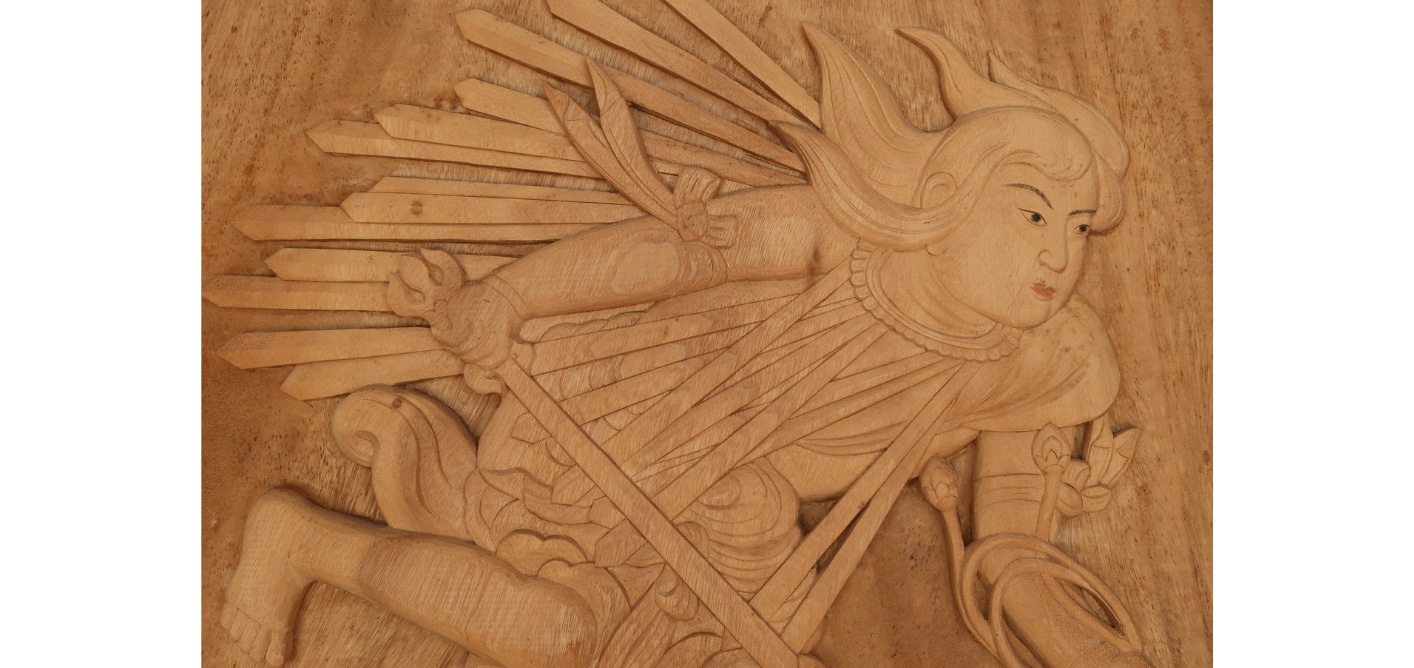
Detail of Tessō Mori’s original wood relief, showing the carved swords and flowing movement.
Tessō Mori's Inspiration
A Figure Unlike Any Other
Bringing a Medieval Legend into Wood

An original interpretation of Ken no Gohō by Tessō Mori.
Discover the Artwork
Related Reading
The Four Heavenly Kings-Kōmokuten — The All-Seeing Guardian of Wisdom
The Japanese Lion-Strength, Protection, and a Family Legacy of Woodcarving