Blog
2026/06/27 11:49
Original Lion Relief by Tessō Mori (Japanese Camphor Wood) For centuries, the lion has been one of the most enduring symbols in Japanese art. Although lions never lived naturally in Japan, stories and Buddhist culture introduced from continental Asia inspired Japanese artists to create an imaginary guardian representing strength, dignity, and protection. Today, the lion appears at the entrances of temples and shrines, on folding screens, in architectural carvings, and in traditional performing arts. Tessō Mori (1946–2024), a government-certified traditional craftsman, worked with many of these traditional motifs throughout his career. His lion relief reflects not only the history of the Japanese lion but also the woodcarving tradition passed down within the Mori family. The Japanese lion, known as Karajishi ("Chinese Lion"), is a mythical creature inspired by lions introduced to East Asia through Buddhism and the Silk Road. Because ancient Japanese artists had never seen a real lion, they imagined an ideal guardian with a flowing mane, a powerful body, and a dignified expression. Today, the Karajishi remains a symbol of courage, protection, prosperity, and authority, appearing throughout Japanese art, architecture, and religious culture. One of the best-known forms of the Japanese lion is the Komainu, often translated as "lion-dog." Standing in pairs at the entrances of shrines and temples, Komainu protect sacred spaces and ward off misfortune. Placed together, one has its mouth open ("A") and the other closed ("Un"), symbolizing A-Un—the beginning and the end of all things. For centuries, these guardian figures have remained one of the defining motifs of Japanese religious architecture and traditional craftsmanship. Among traditional Japanese motifs, one of the most famous is Karajishi Botan—the Lion and the Peony. Combining the King of Beasts and the King of Flowers, it has long been celebrated as an auspicious design representing strength and splendor. The motif appears in folding screens, temple carvings, lacquerware, ceramics, textiles, sword fittings, and the famous Noh and Kabuki play Shakkyo (The Stone Bridge), where a sacred lion dances among blooming peonies. For the Mori family, however, the lion was more than a traditional motif. It became part of the family's own woodcarving history. Among the many depictions of the Japanese lion, none is more celebrated than Chinese Lions (Karajishi) by Kanō Eitoku (1543–1590). Created during Japan's Momoyama period (1573–1603), this folding screen is designated as a National Treasure and is regarded as one of the greatest masterpieces of Japanese painting. Its bold composition has inspired Japanese artists for more than four centuries. When creating this relief, Tessō Mori also looked to Kanō Eitoku's masterpiece. Rather than copying it, he studied its composition and movement, created his own drawing, and translated it into wood through traditional carving techniques. The result is not a reproduction of a National Treasure, but an original work that reflects Tessō Mori's own artistic interpretation. Long before Tessō Mori established himself as a woodcarver, his father, Hideo Mori (1897–1964), had already earned a distinguished reputation. In prewar Kyoto, he became especially well known for carving lions and was affectionately called "Shishi no Morihide"—"Morihide, the Master of Lions." One of his representative works was a lion carved into a wooden standing screen approximately 140 cm (55 in.) high. Although created for the interiors of traditional Japanese homes, its lion design would later inspire one of Tessō Mori's own works. Tessō Mori lost his father when he was fifteen years old. As he continued his own career as a woodcarver, he kept using the chisels that had belonged to his father. Tessō once said, "When I carve with my father's chisels, I feel as though he is encouraging me." His words reflect how Japanese craftsmanship is passed down not only through instruction, but also through tools, experience, and inherited knowledge. Drawing inspiration from both Kanō Eitoku's Chinese Lions and the lion standing screen carved by his father, Hideo Mori, Tessō created his own design and transformed it into this relief. In this way, the work brings together the long tradition of Japanese art and the woodcarving heritage of the Mori family. Inspired by Kanō Eitoku's Chinese Lions and the lion standing screen carved by his father, Hideo Mori, Tessō Mori reimagined a traditional motif for modern living. Rather than simply reducing the original standing screen in size, he created a new drawing and transformed it into a 42 cm (16.5 in.) circular wall relief. The result preserves the strength and dignity of the traditional Japanese lion while presenting it in a form suited to contemporary interiors. Japanese woodcarving evolves as each generation learns from earlier masters while creating works for its own time. This relief continues that tradition. Inspired by Kanō Eitoku's masterpiece and the lion-carving legacy of Hideo Mori, Tessō Mori created a new work that bridges centuries of Japanese art and craftsmanship. Today, Mori Carving Studio continues this tradition, preserving techniques passed down through generations while creating woodcarvings for contemporary life. This relief is more than an object of decoration. It is Tessō Mori's original interpretation of the Japanese lion, inspired by Kanō Eitoku and the Mori family's carving tradition. Hand-carved from Japanese camphor wood, it carries the strength, dignity, and protective symbolism of the Karajishi into a form suited for contemporary living spaces. Natural resin marks and age-related stains reflect the character of the wood. More than a tribute to the past, this relief continues a woodcarving tradition passed down through generations. May it bring the quiet strength of the Japanese lion into your home for years to come. 【View Artwork】 •From the Yakushi-ji Suien to Contemporary Living―Tessō Mori's Original Interpretation • The Peony in Japanese Culture―Why the “King of Flowers” Appears So Often in Japanese Woodcarving • Camellia in Japanese Culture―Elegance, Resilience, and the Beauty of Simplicity •Why Is Japanese Wood Sculpture So Valuable? •Keepers of a Living TraditionThe Japanese Lion
Strength, Protection, and a Family Legacy of Woodcarving
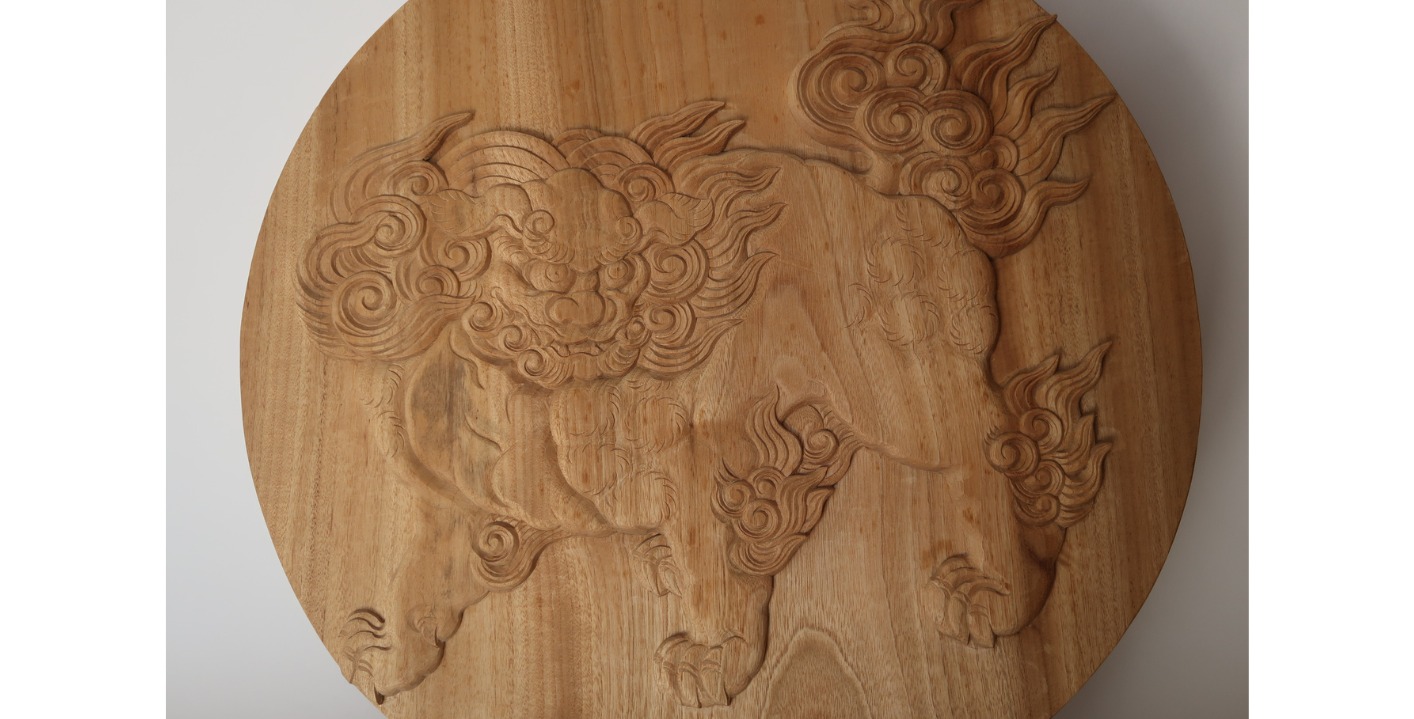
What Is the Japanese Lion?
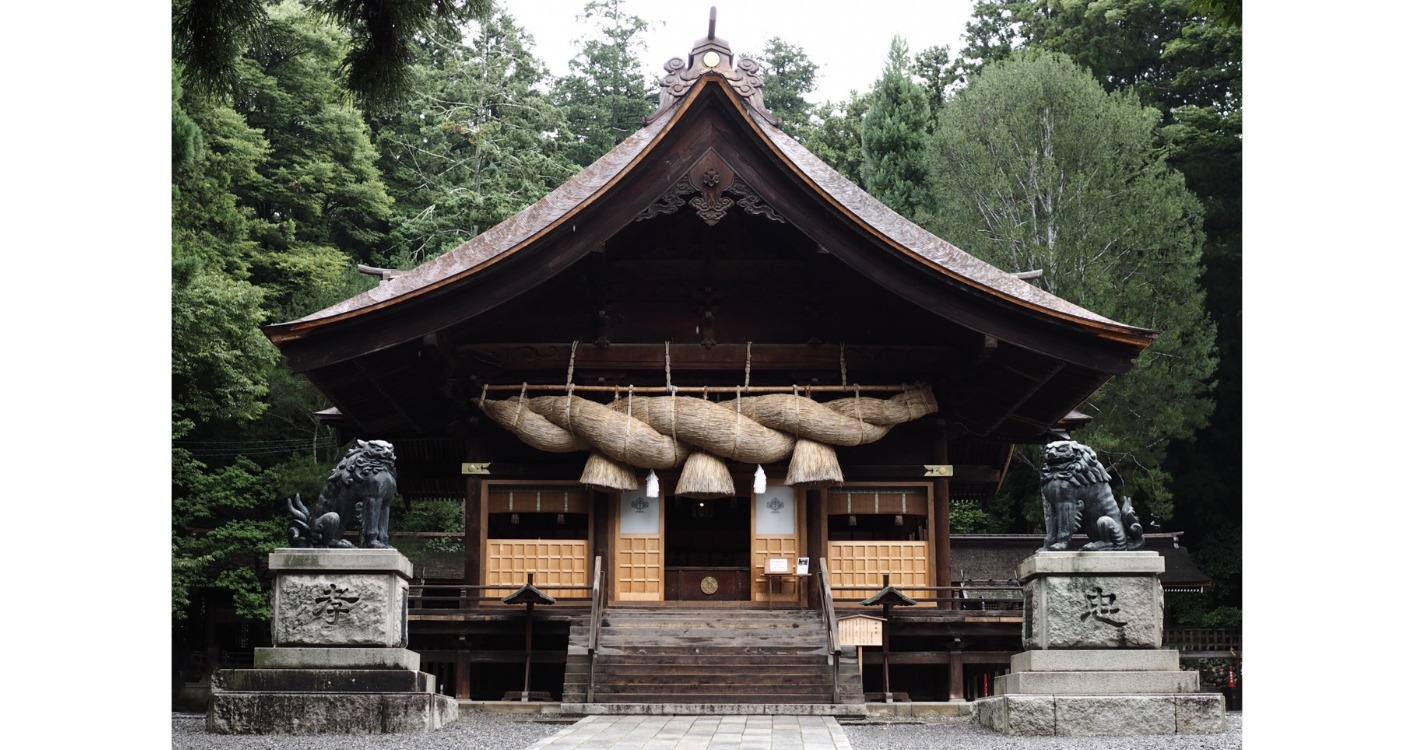
Komainu (guardian lion-dogs) protecting the entrance of a Japanese shrine
The Guardian of Temples and Shrines
The Lion and the Peony
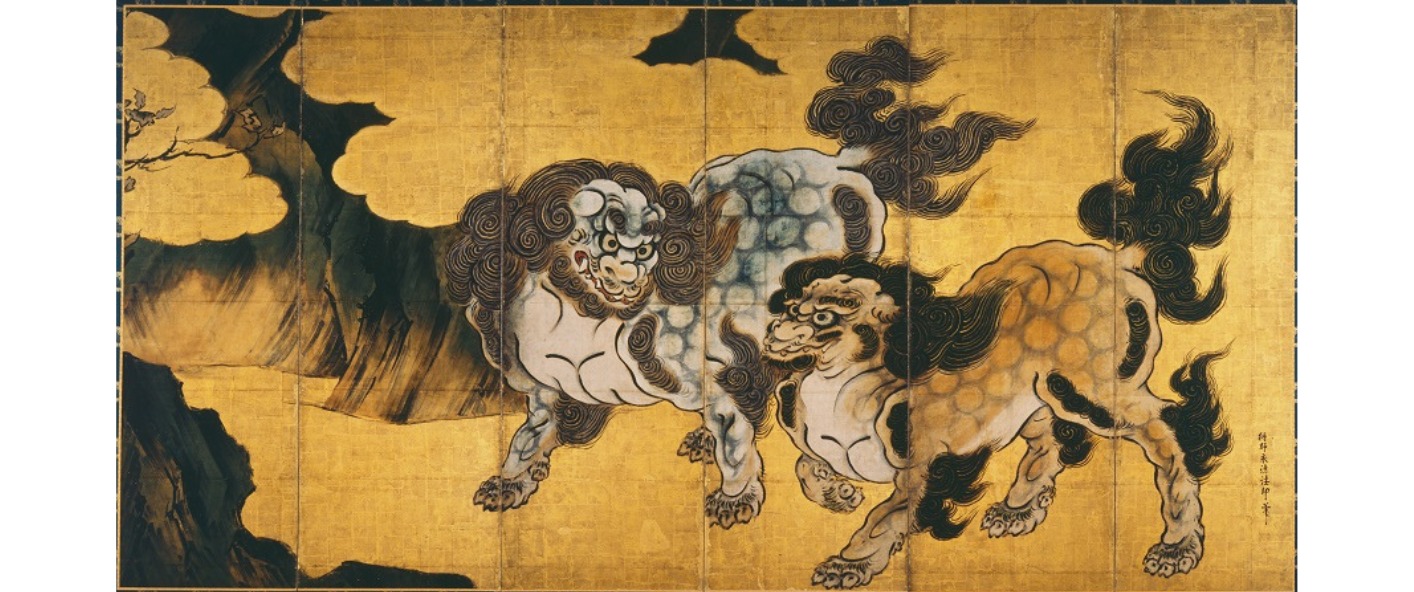
Chinese Lions (Karajishi), National Treasure, by Kanō Eitoku (Source: ColBase, National Institutes for Cultural Heritage, Japan)
Kanō Eitoku's Masterpiece
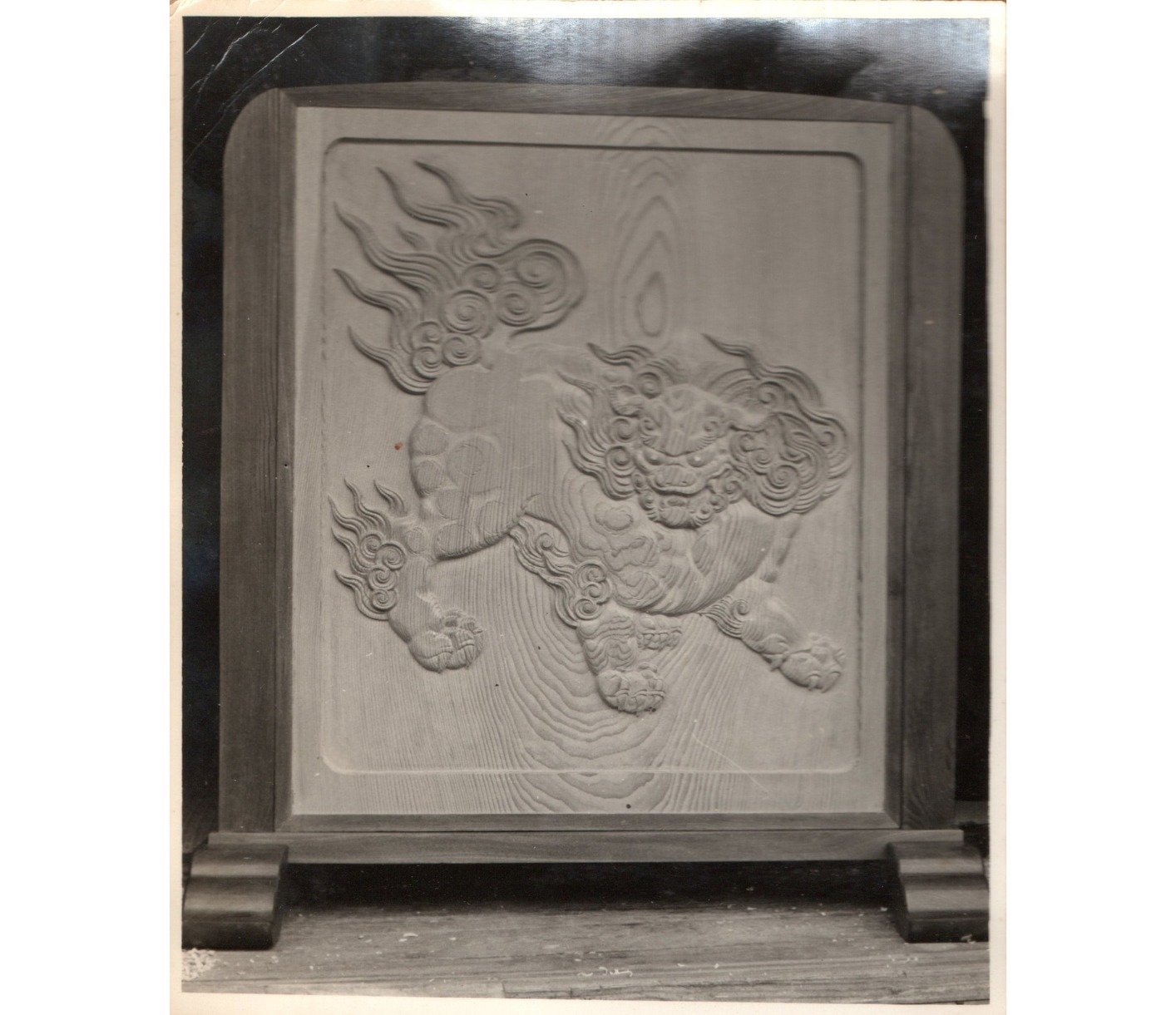
Lion standing screen carved by Hideo Mori (1897–1964)
"Shishi no Morihide"
Inheriting What His Father Left Behind
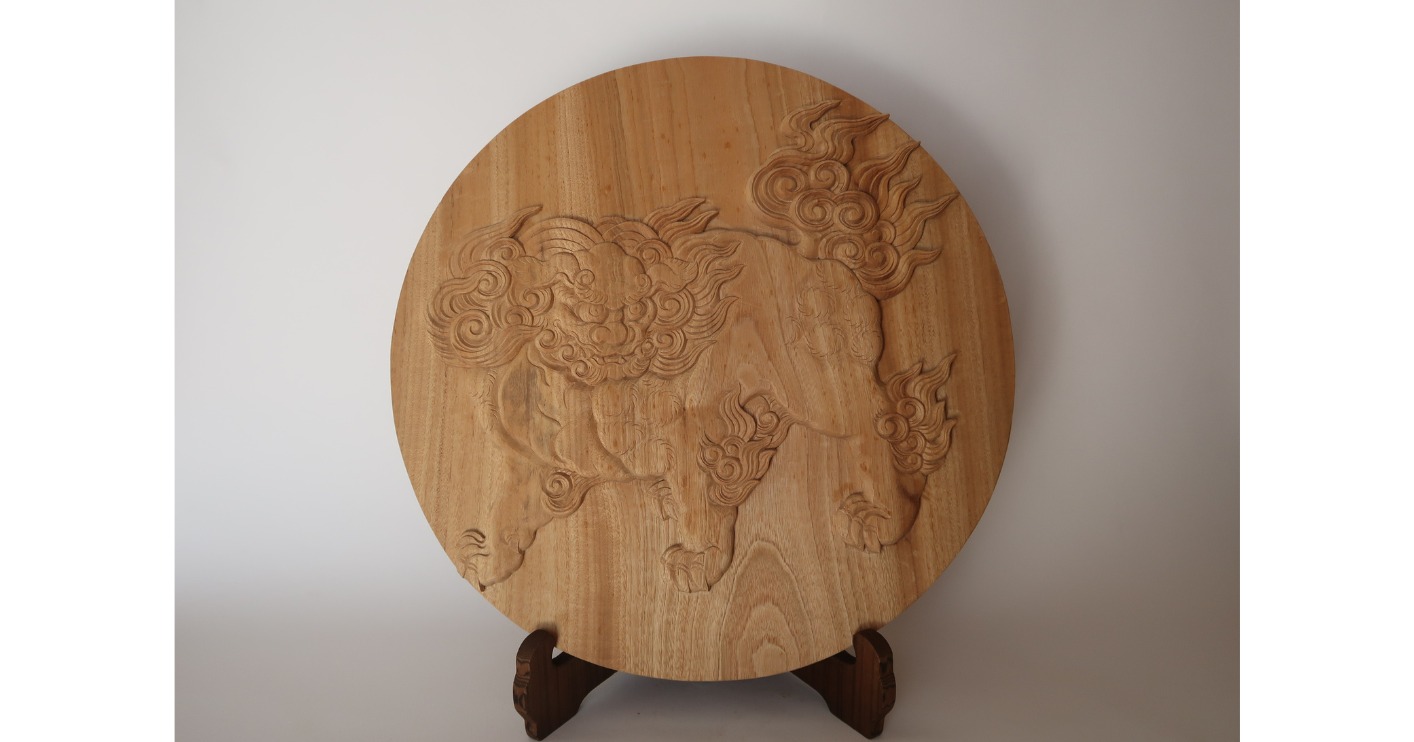
Tessō Mori's reinterpretation as a circular wall relief
From a Large Standing Screen to a Contemporary Home
A Living Tradition
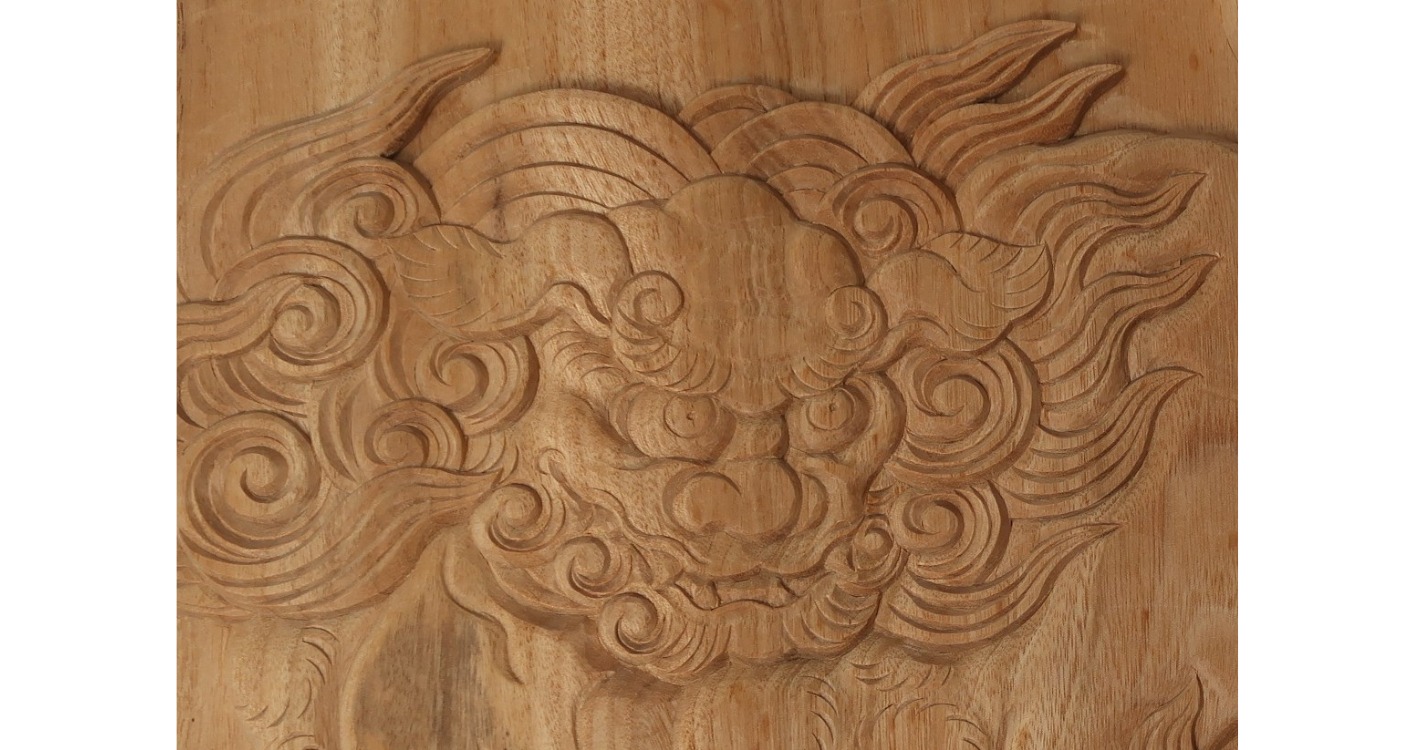
Hand-carved lion relief by Tessō Mori
Discover the Artwork
Related Reading