Blog
2026/06/26 19:01
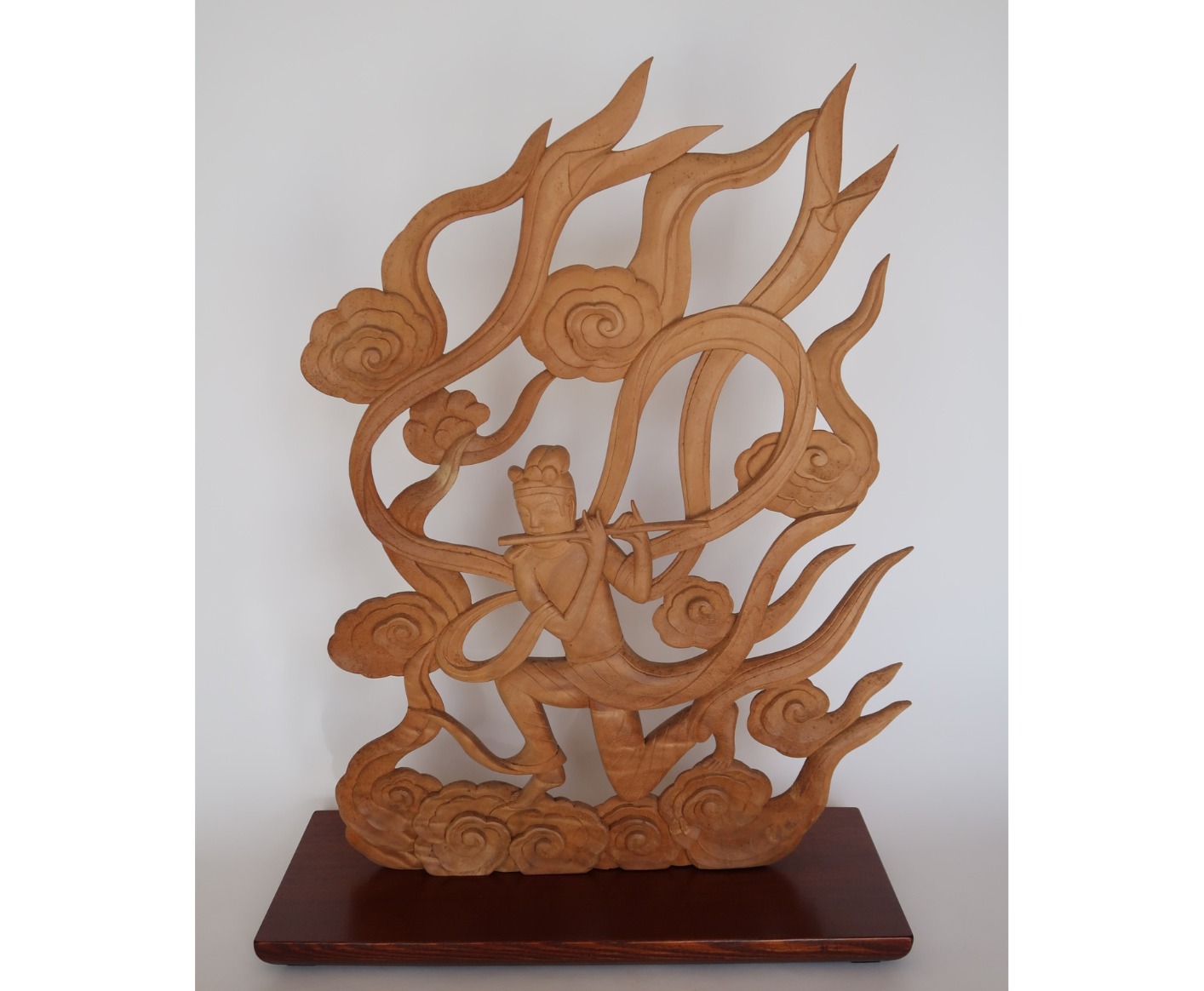
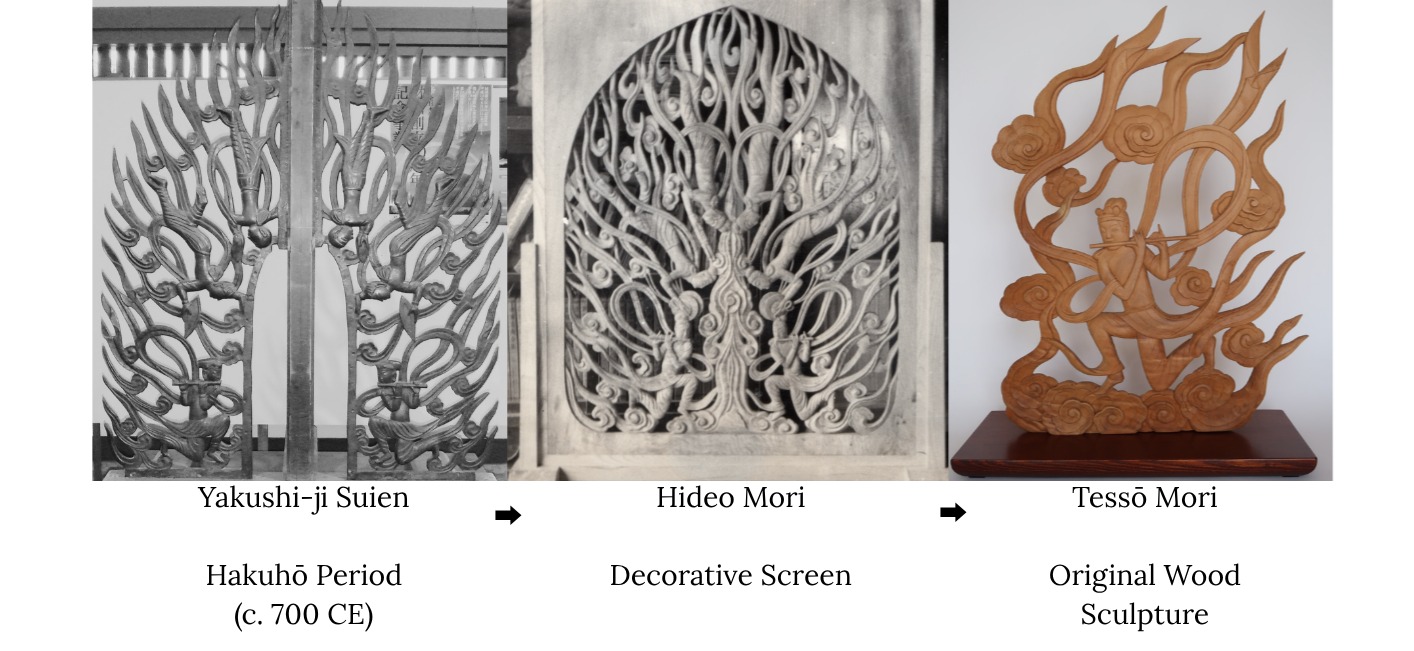
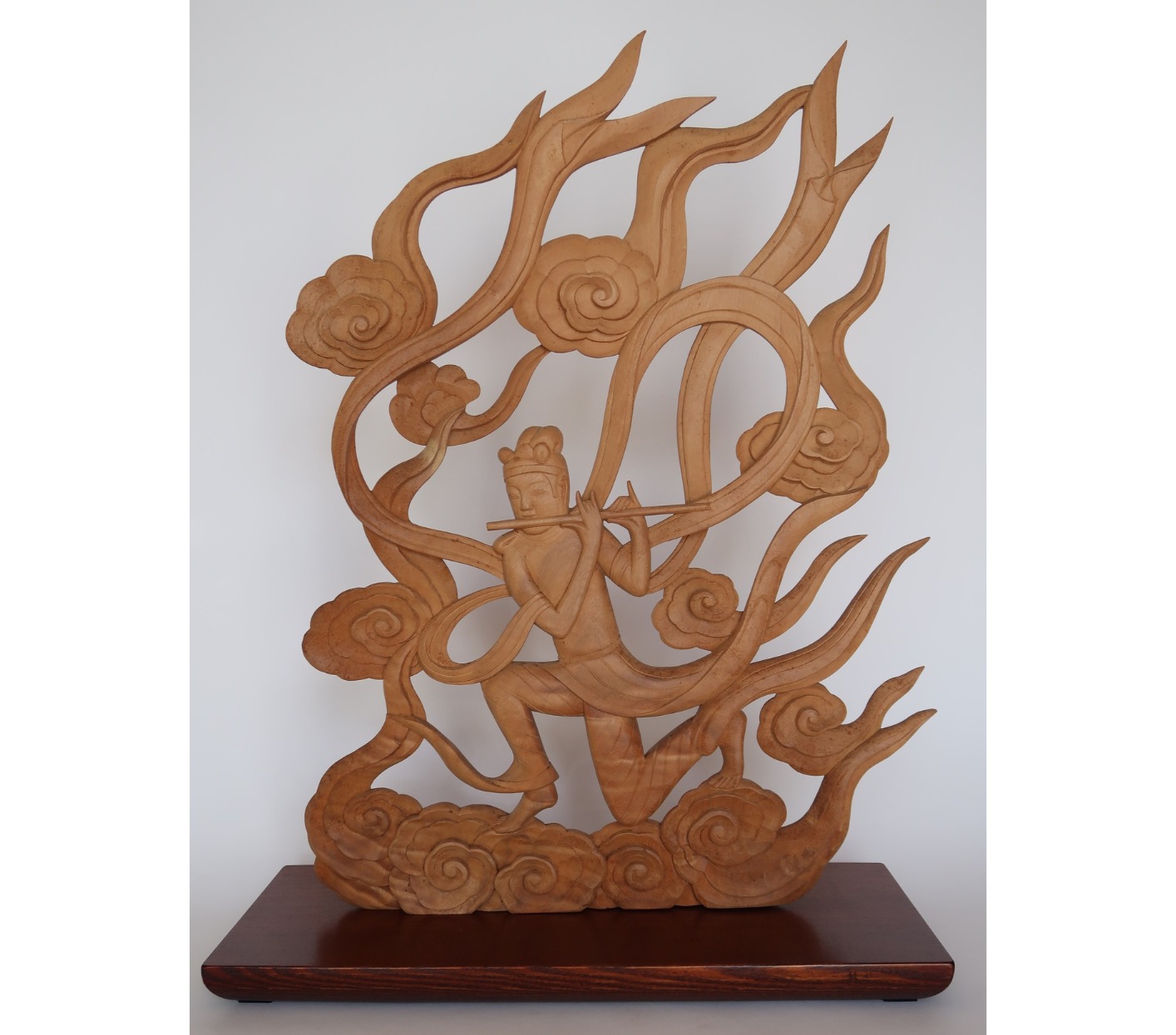
From the Yakushi-ji Suien to Contemporary Living Tessō Mori's original interpretation of the Yakushi-ji Suien. The Suien of Yakushi-ji Temple in Nara is one of Japan's most admired masterpieces of design. Created more than 1,300 years ago, this bronze ornament once stood high above the East Pagoda, where its flowing lines, openwork, and celestial figures seemed to dance in the sky. For generations, artists and craftsmen have been fascinated by its beauty. Among them was Tessō Mori (1946–2024), a government-certified traditional craftsman and master woodcarver. This sculpture is not a reproduction of the Yakushi-ji Suien. It is Tessō Mori's original interpretation, created through woodcarving for contemporary living spaces. The story of this work begins with Tessō Mori's father, Hideo Mori (1897–1964). Hideo was deeply inspired by the Yakushi-ji Suien and reinterpreted its elegant rhythm as a decorative wooden screen. Years later, Tessō often studied the sketches his father had left behind. While working on his own design, he would quietly say, "I still cannot draw flowing lines as beautifully as my father did." For Tessō, these sketches were more than reference materials. They were a reminder of his father's extraordinary sense of line, rhythm, and composition. Yet Tessō did not simply copy his father's screen. He believed that tradition should continue to evolve. His father's work was made for a traditional Japanese interior, but Tessō envisioned something more flexible—an artwork that could be enjoyed naturally in modern homes. From the Yakushi-ji Suien of the 7th century to the original wood sculptures of Hideo Mori and Tessō Mori, this artistic lineage spans more than 1,300 years of Japanese craftsmanship. Tessō Mori did not attempt to reproduce the Yakushi-ji Suien. Nor did he simply reduce his father's decorative screen to a smaller scale. Instead, he reimagined its flowing rhythm through a new composition, new proportions, and a new way of display, creating an original wood sculpture for contemporary living. The spirit of the ancient Suien remains, but the work has become something entirely its own. Designed to be appreciated at eye level, it may be displayed on a wall or presented on its handcrafted base as a freestanding sculpture. Rather than recreating an ancient masterpiece, Tessō Mori transformed its enduring beauty into a work that naturally belongs in today's living spaces. The original Yakushi-ji Suien was cast in bronze. Tessō Mori chose wood. For him, wood was not a substitute for metal. It was a material with its own life and beauty. Wood has warmth. It has grain. It changes gently with age. No two pieces are ever exactly alike. Rather than imitating bronze, Tessō embraced the natural character of wood and used it to express the quiet rhythm of the Suien in a new way. The result is a work that feels both ancient and intimate. It carries the memory of the Yakushi-ji Suien, yet it belongs naturally within a contemporary home. This sculpture is presented on a custom-made base crafted from Japanese zelkova (Keyaki). The base is finished with traditional Fuki-Urushi lacquer. Fuki-Urushi is a Japanese finishing technique in which natural lacquer is rubbed into the wood rather than painted over it. This process enhances the natural grain and creates a deep, elegant luster. Over time, the surface becomes richer and more beautiful. The combination of hand-carved wood and lacquered zelkova brings together two traditional Japanese crafts. The sculpture and base do not compete with each other. They exist in quiet harmony. For centuries, the Yakushi-ji Suien could only be admired from far below. Tessō Mori imagined a different way of experiencing its beauty. He created a sculpture that can be viewed closely, where every curve and open space can be appreciated. As natural light changes throughout the day, the openwork creates subtle shifts of shadow and presence. The sculpture may be displayed as wall art by attaching suitable hanging hardware, or enjoyed as a freestanding work on its base. In either form, it brings a quiet Japanese presence into a living room, study, entrance hall, gallery, or private collection. This is not temple architecture. It is ancient inspiration transformed into an artwork for daily life. This work connects three moments in Japanese artistic history. The anonymous craftsmen of the Hakuhō period created the original Yakushi-ji Suien. Hideo Mori reinterpreted its flowing beauty through woodcarving. Tessō Mori then transformed that inherited inspiration into a sculpture for modern interiors. This is the essence of Japanese craftsmanship. Tradition is not only preserved. It is carried forward. Each generation receives beauty from the past, studies it deeply, and gives it new life through its own hands. Tessō Mori's sculpture belongs to that living lineage. This sculpture is more than an object of decoration. It is Tessō Mori's original interpretation of one of Japan's greatest artistic masterpieces. Inspired by the Yakushi-ji Suien and shaped by two generations of the Mori family, it brings together ancient Buddhist art, traditional Japanese woodcarving, and the refined craftsmanship of Fuki-Urushi lacquer. Its quiet presence changes gently with the light. Its flowing lines echo the timeless rhythm of the Suien. Its natural wood and handcrafted finish invite close appreciation, revealing new expressions over time. More than a tribute to the past, this sculpture is a living continuation of a tradition that has inspired artists for over thirteen centuries. May it bring the timeless beauty of the Yakushi-ji Suien into your own home and become part of your story for years to come. • The Art of Appreciating Buddha Heads • Maitreya Bodhisattva-The Quiet Smile and the Japanese Sense of BeautyTessō Mori's Original Interpretation
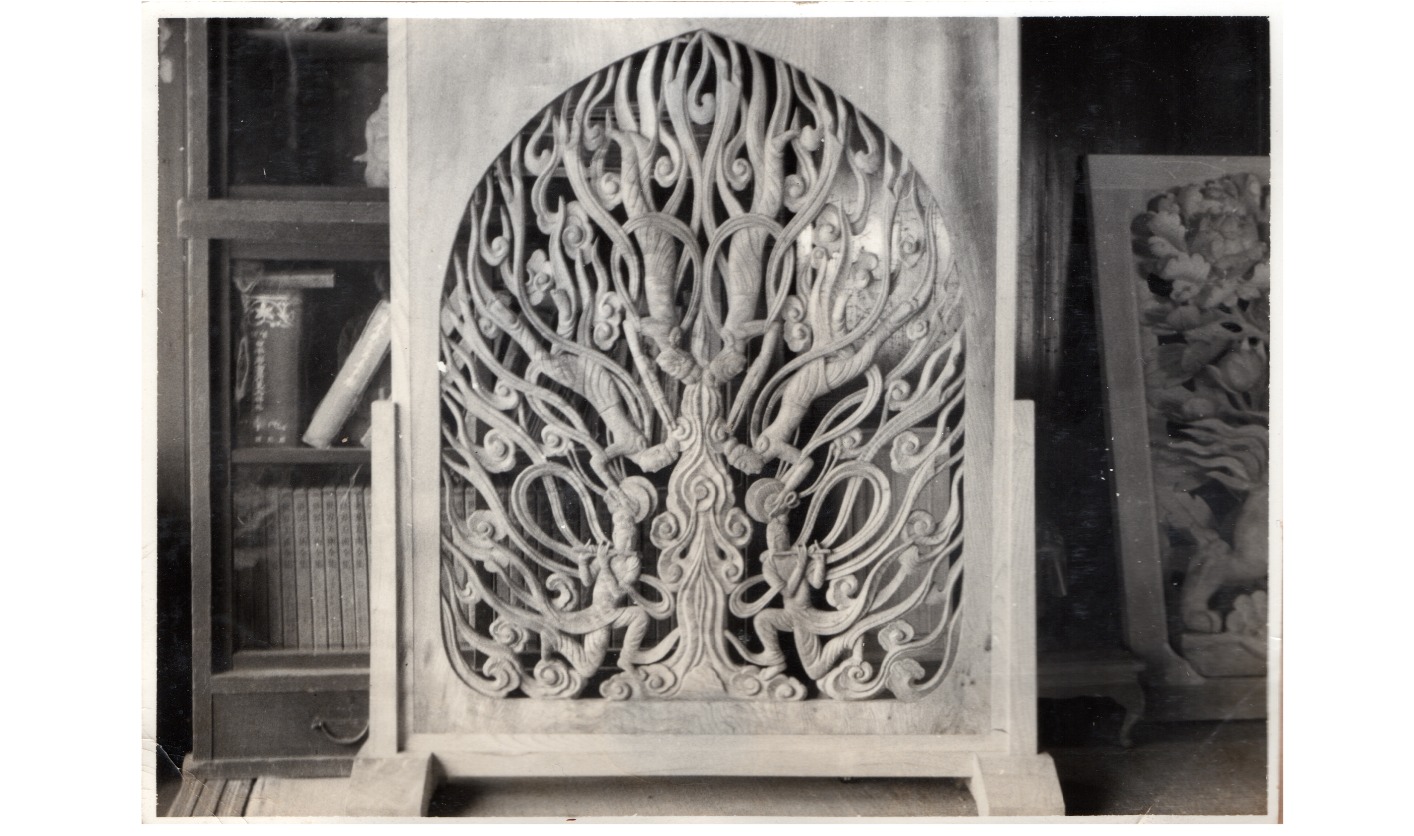
A decorative screen inspired by the Yakushi-ji Suien, designed by Hideo Mori. Tessō Mori later studied these flowing forms while developing his own interpretation.
From Hideo Mori to Tessō Mori
An Original Work, Not a Reproduction
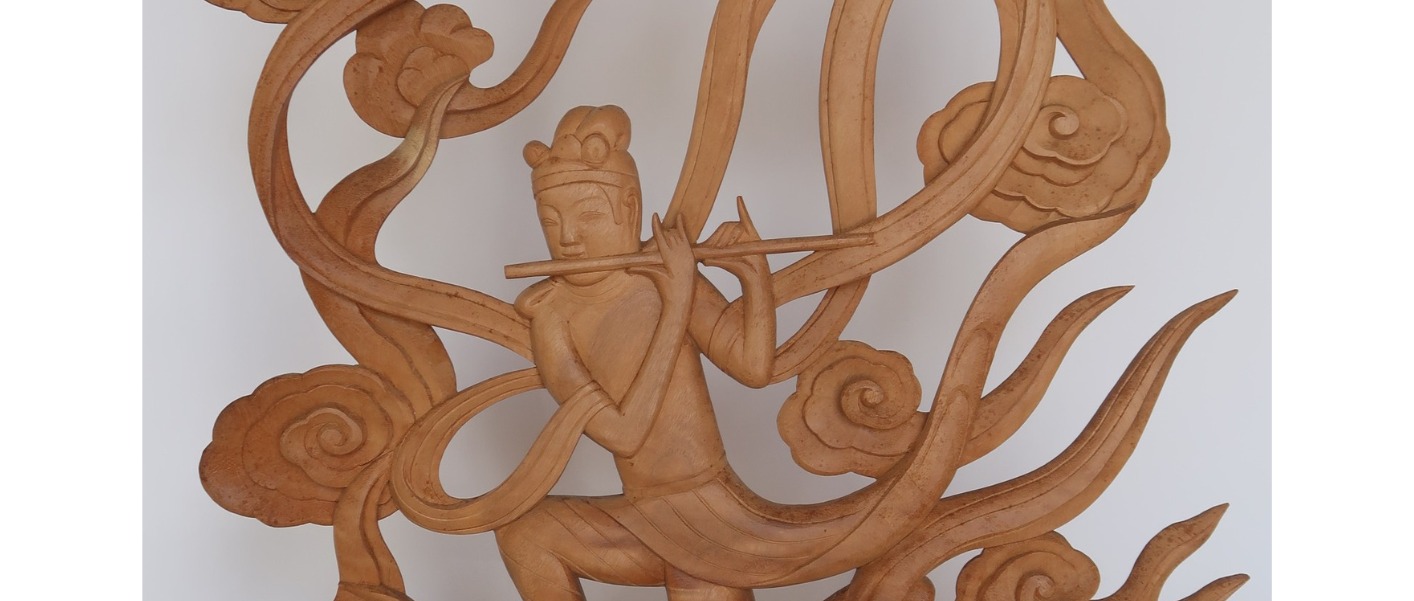
Natural grain and hand-carved details give each sculpture its own unique character.
Why Wood?
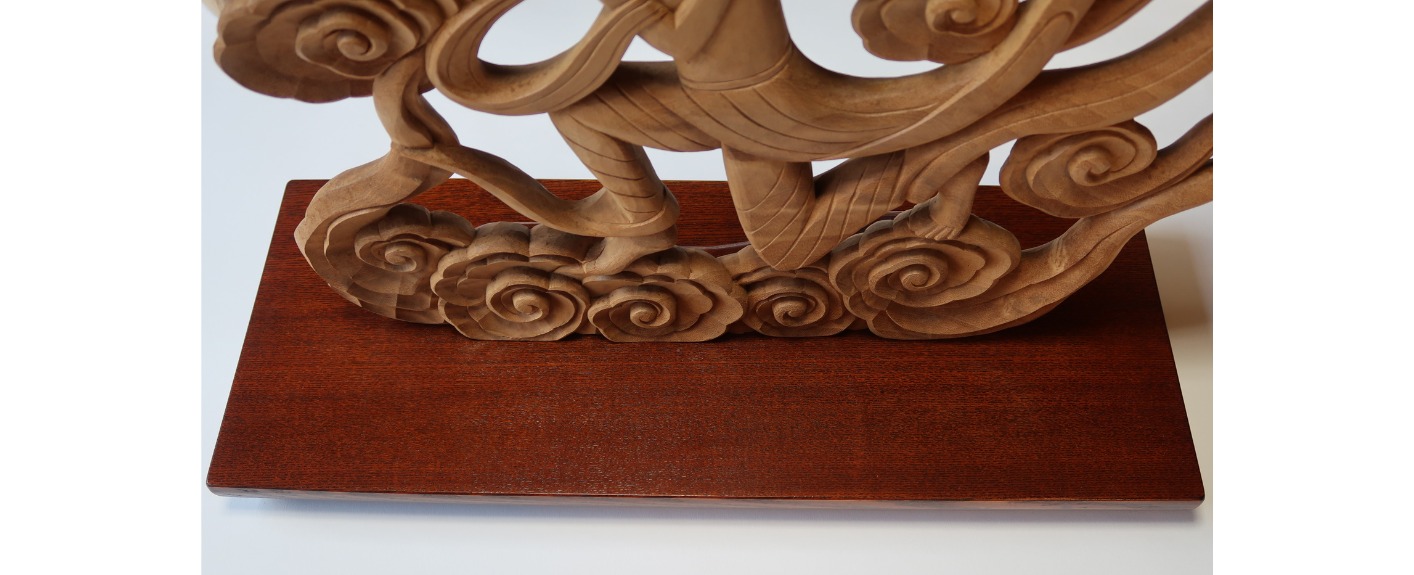
The custom-made Keyaki base is finished using the traditional Japanese Fuki-Urushi lacquer technique.
A Base Finished with Fuki-Urushi Lacquer
Designed for Contemporary Living
A Living Artistic Lineage
Discover the Artwork
【View Artwork】
Related Reading