Blog
2026/07/03 10:39
Every work of art tells a story. Sometimes that story is preserved in documents or family records. Sometimes it is remembered by the artist. And sometimes, the story has simply been lost. This wooden owl by Japanese master woodcarver Tessō Mori (1946–2024) belongs to that final category. Unlike many of Mori's Buddhist sculptures and temple carvings, no records remain explaining why he created this owl. We do not know whether it was made for an exhibition, a private commission, or simply because the subject inspired him at that particular moment. Yet even without those answers, the sculpture itself still speaks. For more than half a century, Tessō Mori devoted his life to traditional Japanese woodcarving. His work ranged from Buddhist statues and temple ornamentation to architectural carvings and contemporary relief sculptures. An owl is therefore an unusual subject within his body of work. Rather than creating an anatomically detailed study of the bird, Mori reduced its form to broad, confident planes. The result is a sculpture that feels calm, powerful, and timeless. Its appeal comes not from decorative detail, but from the quiet presence of the wood itself. Perhaps the most distinctive feature of this sculpture is what Tessō Mori deliberately chose not to remove. Across the surface, the marks left by the carving chisel remain clearly visible. Many modern wooden sculptures are carefully sanded until every trace of the carving process disappears. Mori chose a different path. Each chisel mark records a decision made by the craftsman's hand, preserving the energy and rhythm of the carving itself. In his later years, Mori created numerous Buddhist sculptures inspired by the works of the seventeenth-century monk-sculptor Enkū, whose carvings are celebrated for their bold, expressive chisel marks rather than polished surfaces. No records survive to indicate whether Enkū directly influenced this owl. Nevertheless, the visible chisel marks reveal a similar appreciation for the honesty of hand carving. Rather than concealing the making of the sculpture, Mori allowed the carving process itself to become part of the finished work. As light moves across the surface throughout the day, these textured facets create subtle changes in expression, reminding the viewer that this sculpture was shaped entirely by hand. The sculpture also reflects another characteristic often found in Mori's work: respect for the natural qualities of wood. Instead of forcing the material into excessive detail, he allowed the grain, natural color variations, and organic character of the timber to remain visible. This philosophy has long been valued in Japanese craftsmanship. Rather than trying to dominate nature, the craftsman works together with it. Every piece of wood possesses its own unique character. The artist's role is not to hide that individuality, but to reveal it. The honest answer is that we do not know. No written records survive, and the artist never explained why he chose this subject. That uncertainty, however, has become part of the sculpture's history. Rather than inventing a story, we believe it is more respectful to preserve the truth. Collectors often value authenticity over speculation. What remains certain is the craftsmanship itself. The confident carving, balanced proportions, and expressive face all reveal the hand of an experienced master. Even when the original inspiration has been lost, the quality of the work continues to speak for itself. Not every artwork requires a complete explanation. Some invite us simply to observe. This owl is one of those works. Its quiet expression, solid form, and boldly carved surface encourage the viewer to appreciate the beauty of hand carving itself. The story behind its creation may have faded with time, but the skill, honesty, and character preserved in every chisel mark remain. In that sense, the sculpture continues to tell its own story—one cut at a time. For detailed photographs, dimensions, and purchasing information, please visit the product page below. → View the ArtworkWhy Did Tessō Mori Carve an Owl?
The Story Behind an Unusual Wooden Sculpture

A Rare Subject for a Temple Carver
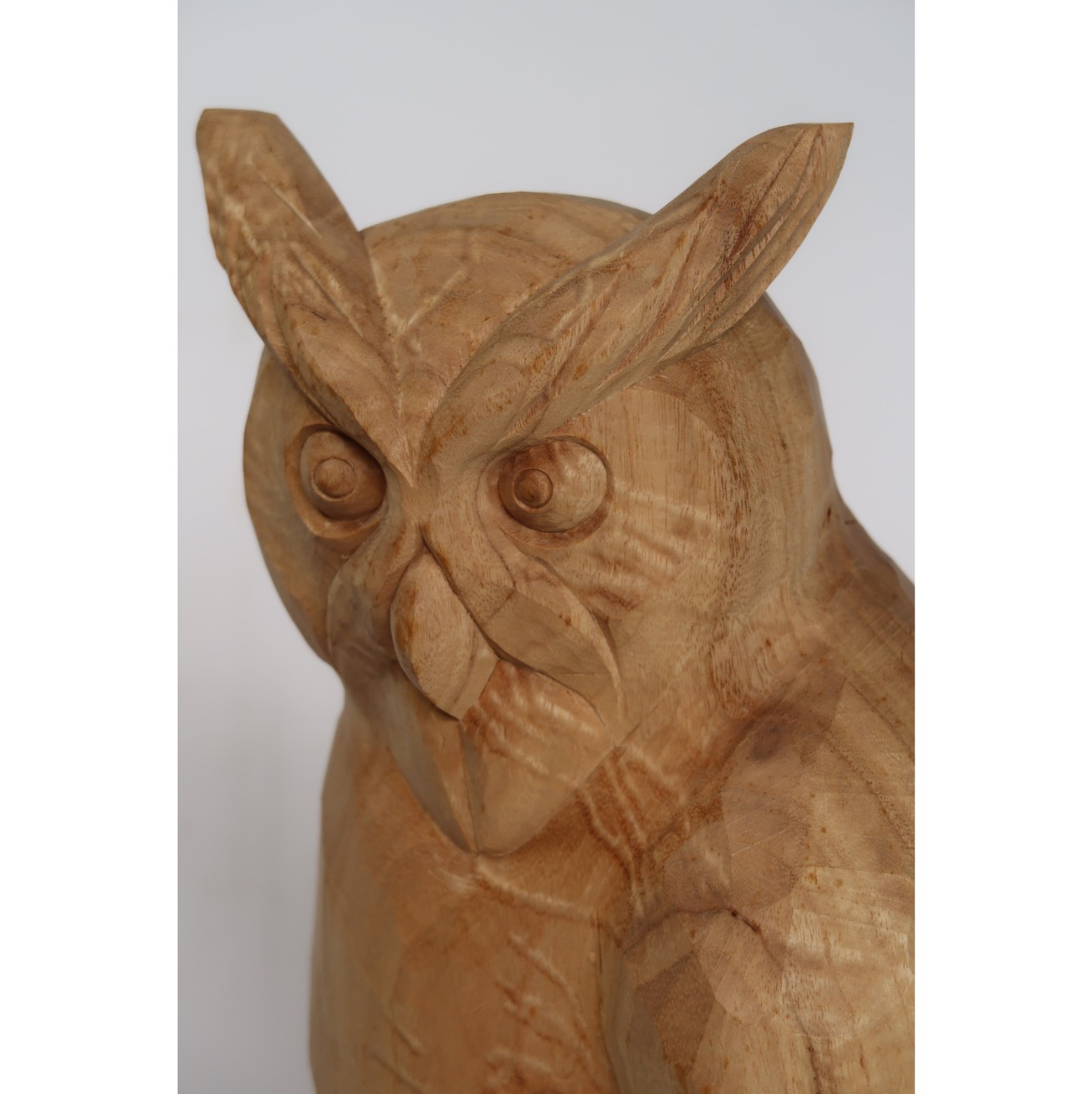
The Beauty of Visible Chisel Marks
Respecting the Character of the Wood
Why an Owl?
A Sculpture That Speaks for Itself
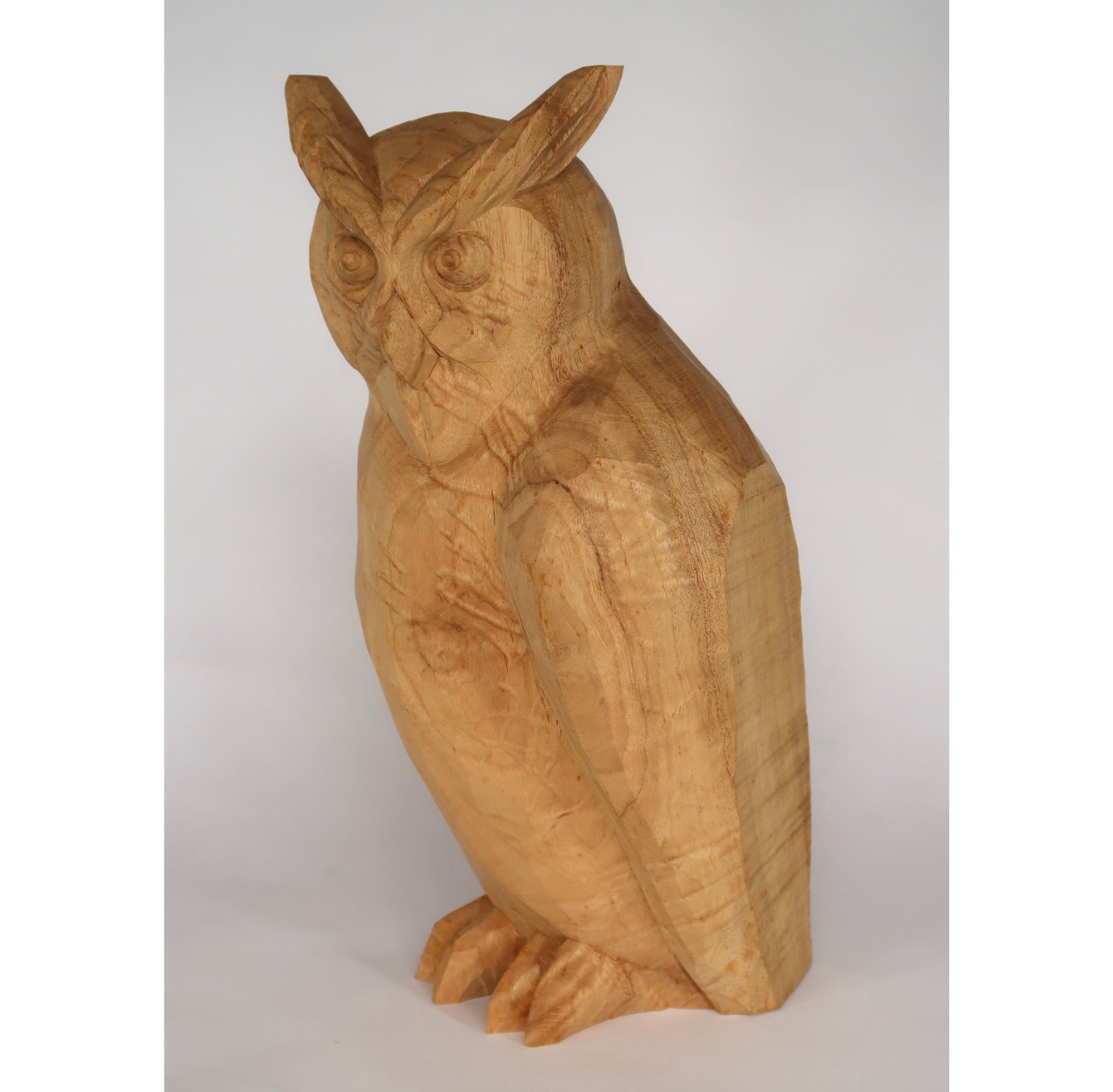
An original wood sculpture by Tessō Mori.
Discover the Original Owl by Tessō Mori
Related Reading