Blog
2026/06/29 10:40
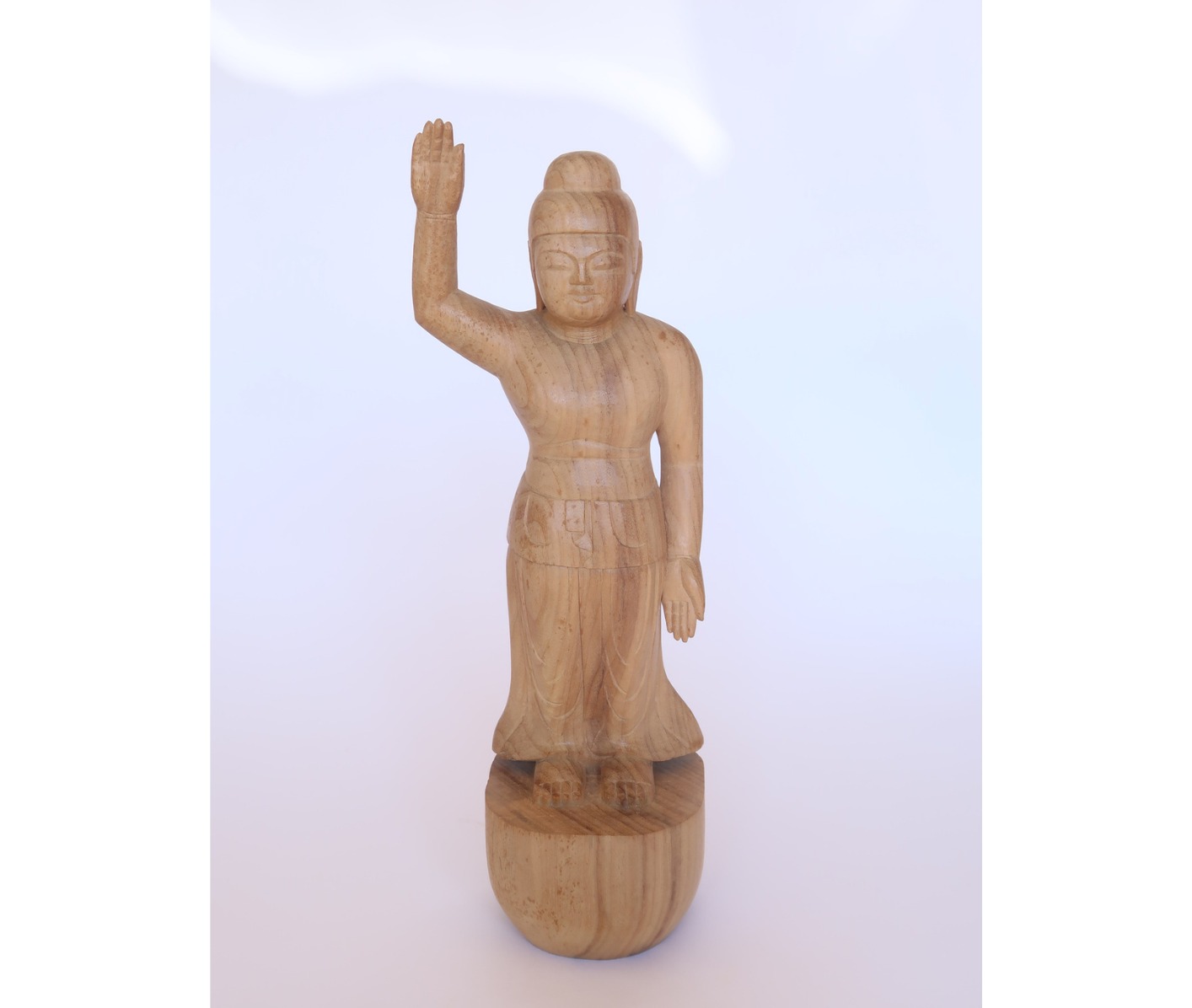
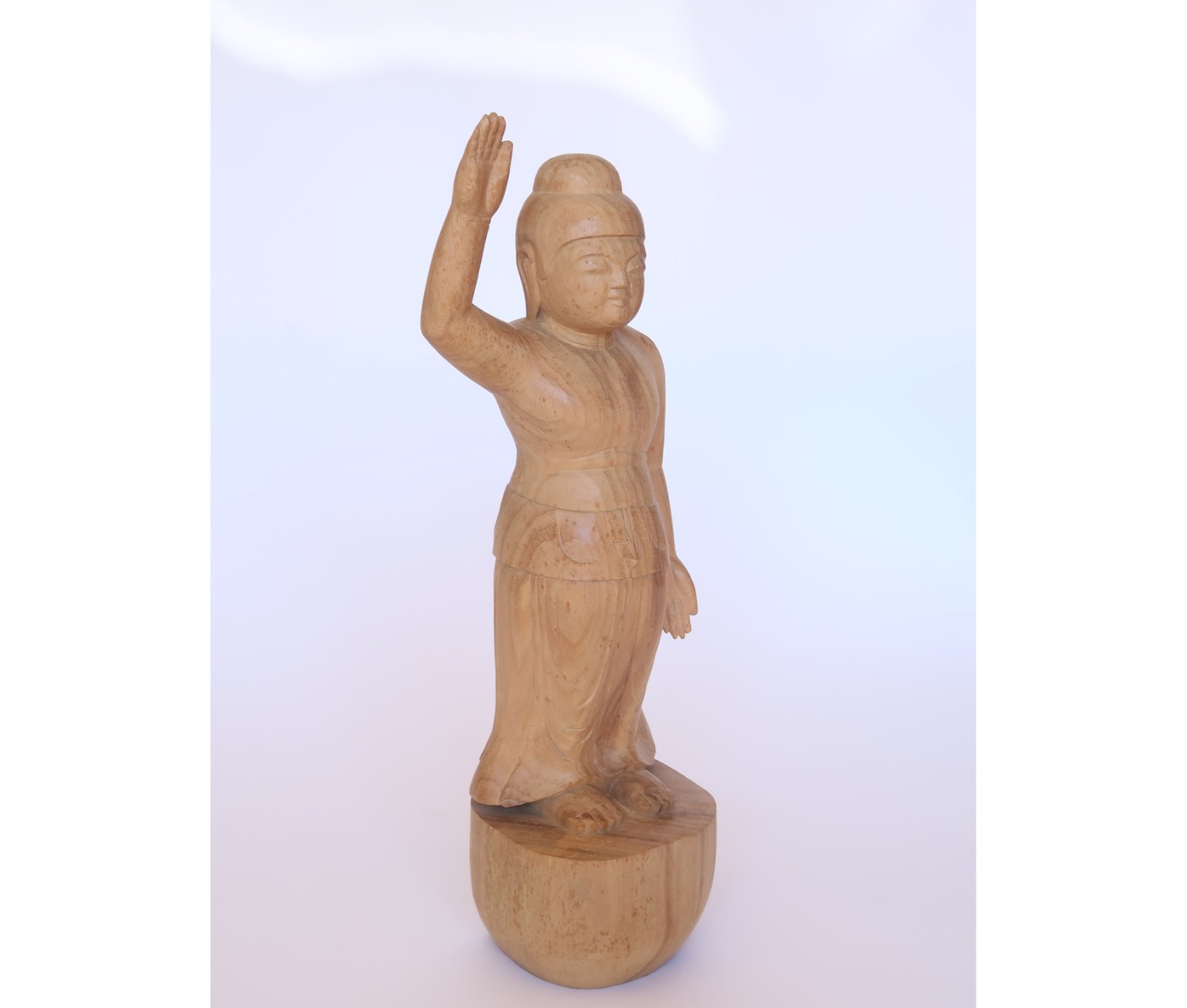
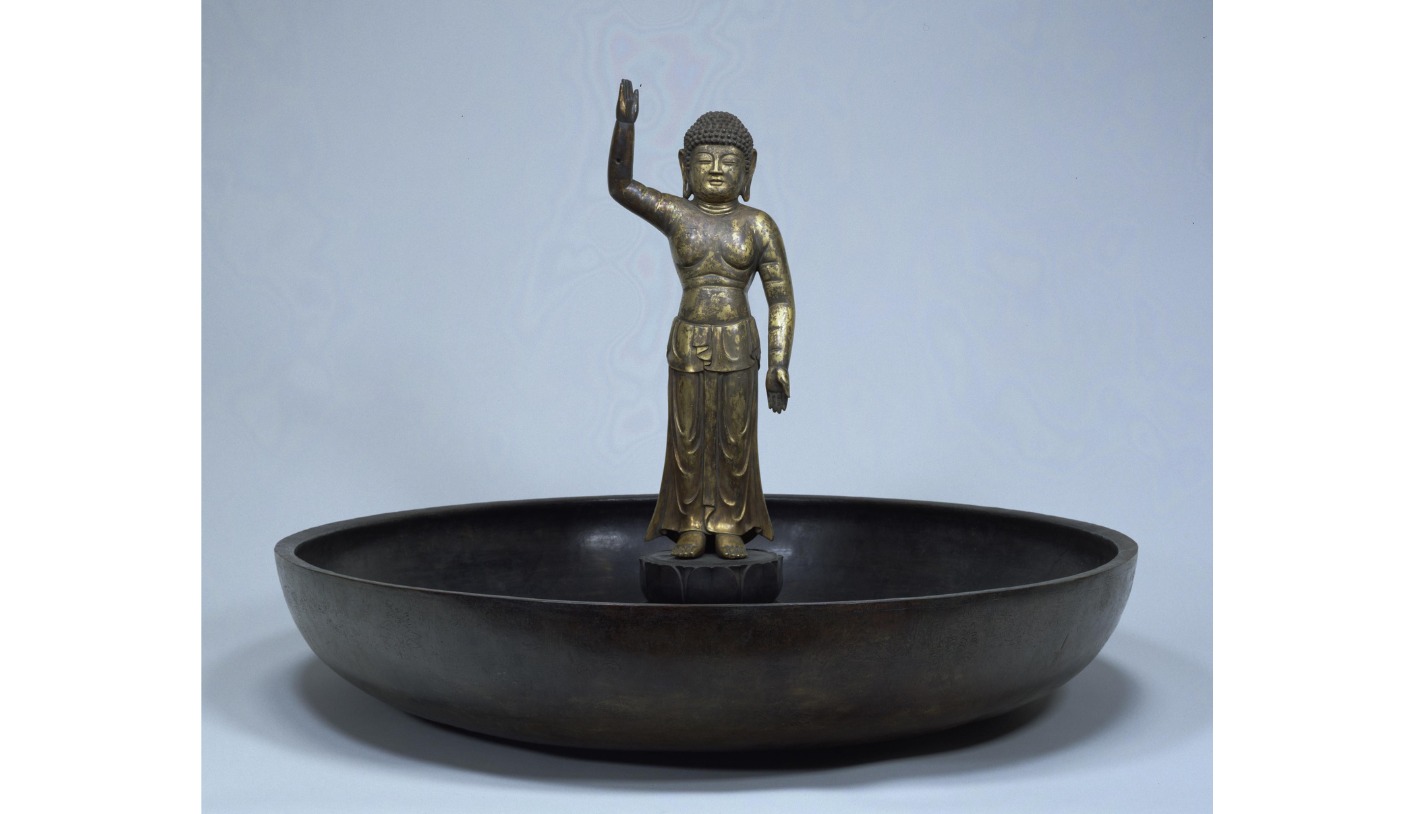
Birth Buddha by Tessō Mori, carved around 2017. Every spring, temples throughout Japan become filled with flowers. Small children gather around colorful floral pavilions. Visitors gently pour sweet tea over a small statue of the infant Buddha. For many Japanese people, this annual celebration is simply part of growing up. Yet for visitors from overseas, it often comes as a surprise. Why is the Buddha shown as a child? Why is one hand pointing toward the sky while the other points toward the earth? And why do people pour tea over the statue? The answers reveal one of the most beautiful traditions in Japanese Buddhism. The raised right hand and lowered left hand symbolize the traditional Birth Buddha posture. According to Buddhist tradition, Prince Siddhartha—the historical Buddha—was born in Lumbini, in present-day Nepal. Ancient Buddhist scriptures describe miraculous events surrounding his birth. It is said that immediately after being born, the infant took seven steps. He raised one hand toward heaven and pointed the other toward the earth, declaring: "Above heaven and below heaven, I alone am honored." his is one traditional English translation of the famous Buddhist declaration. This famous phrase is often misunderstood. It does not mean that the Buddha considered himself superior to everyone else. Instead, Buddhist scholars generally understand it to mean that every human life possesses a unique and irreplaceable value. Each person exists only once in the universe. Every life deserves respect. This idea became one of the foundations of Buddhist thought throughout Asia. The standing infant with one hand raised became known as the Birth Buddha, one of the oldest iconographic forms in Buddhist art. Hanamatsuri, the Japanese celebration of the Buddha's birthday, is held around April 8. Every year on April 8, temples across Japan celebrate Hanamatsuri, literally "Flower Festival." Its formal Buddhist name is Kanbutsu-e, meaning "Bathing the Buddha Ceremony." A small flower-covered pavilion called a Hanamidō is placed inside the temple. At its center stands a Birth Buddha. Visitors gently pour Ama-cha, a sweet herbal tea, over the statue. The custom comes from the legend that heavenly dragons poured fragrant water from the sky when the Buddha was born. Over the centuries, this Buddhist ceremony blended naturally with Japan's love of spring flowers. Cherry blossoms, fresh greenery, and seasonal blossoms transformed Hanamatsuri into one of Japan's most beloved spring traditions. Children often participate in colorful processions, temples distribute sweet tea, and entire communities gather to celebrate. Today, Hanamatsuri remains one of the most gentle and family-friendly festivals in Japanese Buddhism. Unlike many Buddhist sculptures that express majesty or solemnity, Birth Buddha statues possess something different. They look almost like children. Their rounded faces. Their small hands. Their gentle smiles. These qualities have appealed to Japanese people for centuries. Japanese aesthetics have long valued small, intimate, and approachable forms of beauty. This can be seen in bonsai, tea utensils, netsuke carvings, and countless traditional crafts. Birth Buddha sculptures embody this same sensibility. Although they represent one of the most sacred moments in Buddhism, they also inspire warmth and affection. For many families, they are not only religious objects but reminders of compassion, childhood, and hope. Birth Buddha in Japanese Art An ancient Birth Buddha statue reflects one of the oldest forms of Buddhist sculpture in Japan. Birth Buddha (Replica of an 8th-century original), Tokyo National Museum. Source: ColBase (https://colbase.nich.go.jp) Among the oldest surviving examples is the famous bronze Birth Buddha preserved at Tōdai-ji Temple in Nara, designated as a National Treasure. This small bronze statue is believed to date from the Nara period, when Buddhist culture flourished under imperial patronage. Its dignified posture and youthful form show how early Japanese sculptors transformed Buddhist teachings into a visible symbol of sacred birth. Beginning in the Nara period, Japanese sculptors adapted Indian and Chinese models into forms that reflected Japanese ideals of serenity and softness. Rather than emphasizing dramatic movement, they created calm expressions and rounded features. These characteristics remain one of the defining qualities of Japanese Buddhist sculpture today. Its gentle expression and childlike form give the sculpture a warm, approachable presence. Around 2017, master woodcarver Tessō Mori created this Birth Buddha in Japanese camphor wood. Rather than reproducing an ancient masterpiece exactly, he sought to express the gentle charm that has made Birth Buddha figures beloved in Japan for generations. Its slightly rounded face. Its quiet smile. Its childlike proportions. Together they create an atmosphere that feels both sacred and approachable. According to family recollections, Tessō Mori carved several Birth Buddha figures over the years because customers—especially women—were drawn to their gentle, endearing appearance. Today, only one example is known to remain in the Mori family collection, although additional examples may yet be discovered. Like many of Mori's sculptures, the natural camphor wood has matured over time. Small areas of resin and natural staining have gradually appeared on the surface. Rather than flaws, these are natural characteristics of aged camphor wood and reflect the passage of time. Many Buddhist sculptures invite contemplation. Some express wisdom. Others represent protection. The Birth Buddha is different. It celebrates the beginning of life itself. For more than a thousand years, Japanese people have welcomed spring by pouring sweet tea over this small figure. It is a quiet ritual of gratitude—for life, for children, for nature, and for the hope that every new beginning brings. This sculpture by Tessō Mori continues that tradition in wood. It quietly carries forward a celebration that has welcomed spring in Japan for more than fourteen centuries. More than a sculpture, it quietly expresses Japan's enduring respect for life, nature, and new beginnings. This Birth Buddha continues Japan's long tradition of celebrating life, spring, and new beginnings. Birth Buddha Related Reading • The Art of Appreciating Buddha Heads • Why Does Every Buddha Look Different? - The Human Face of Enlightenment Across AsiaThe Birth Buddha
Why Japanese People Celebrate the Buddha's Birthday Every Spring
The Moment of the Buddha's Birth
Hanamatsuri — Japan's Celebration of the Buddha's Birthday

Why Japanese People Love Birth Buddha Statues
For well over a millennium, this iconography has remained an enduring symbol of the Buddha's birth in Japanese Buddhist art. Tessō Mori's Birth Buddha

A Sculpture That Celebrates Life

Related Artwork
An Original Wood Sculpture by Tessō Mori