Blog
2026/06/25 15:30
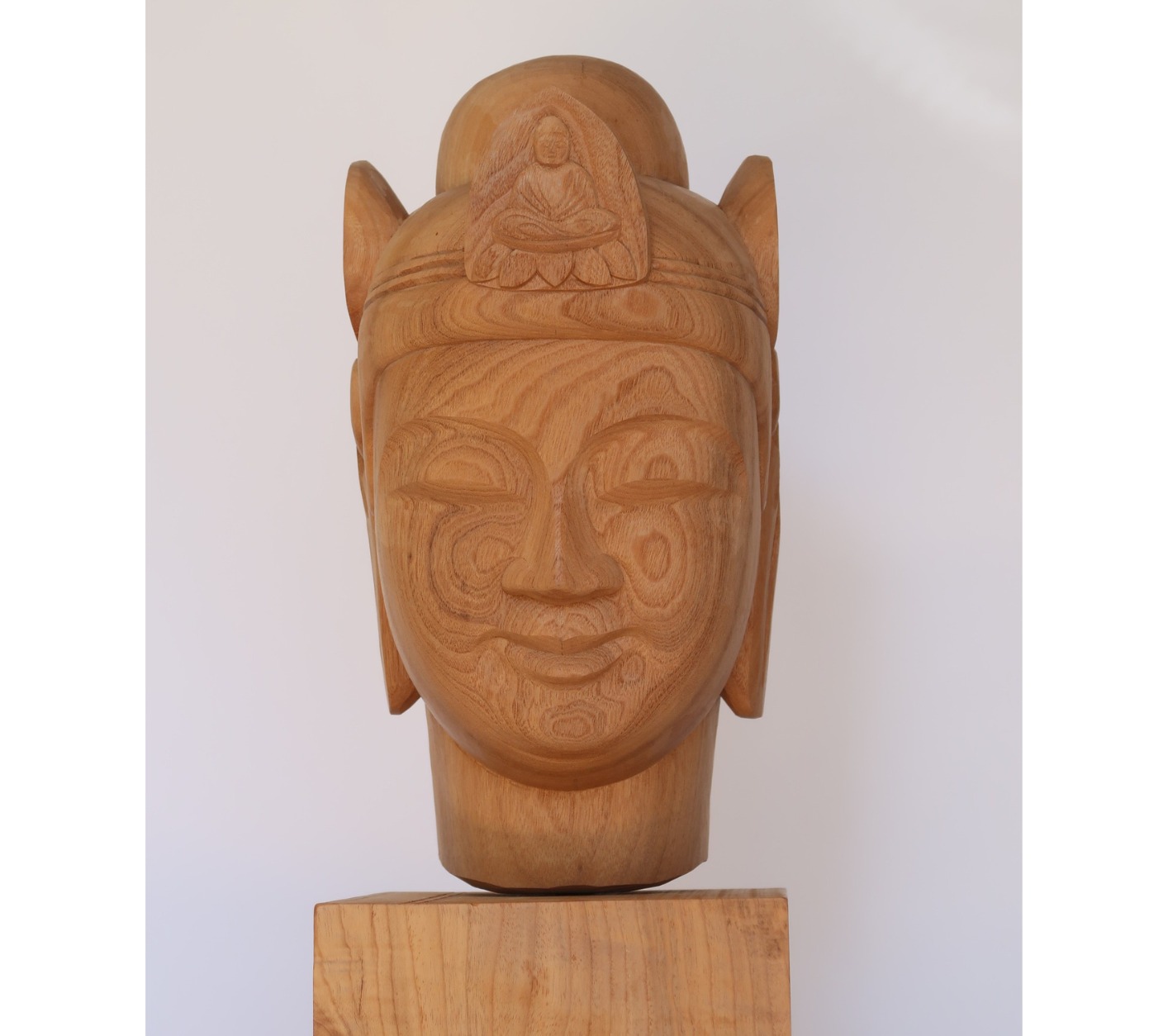
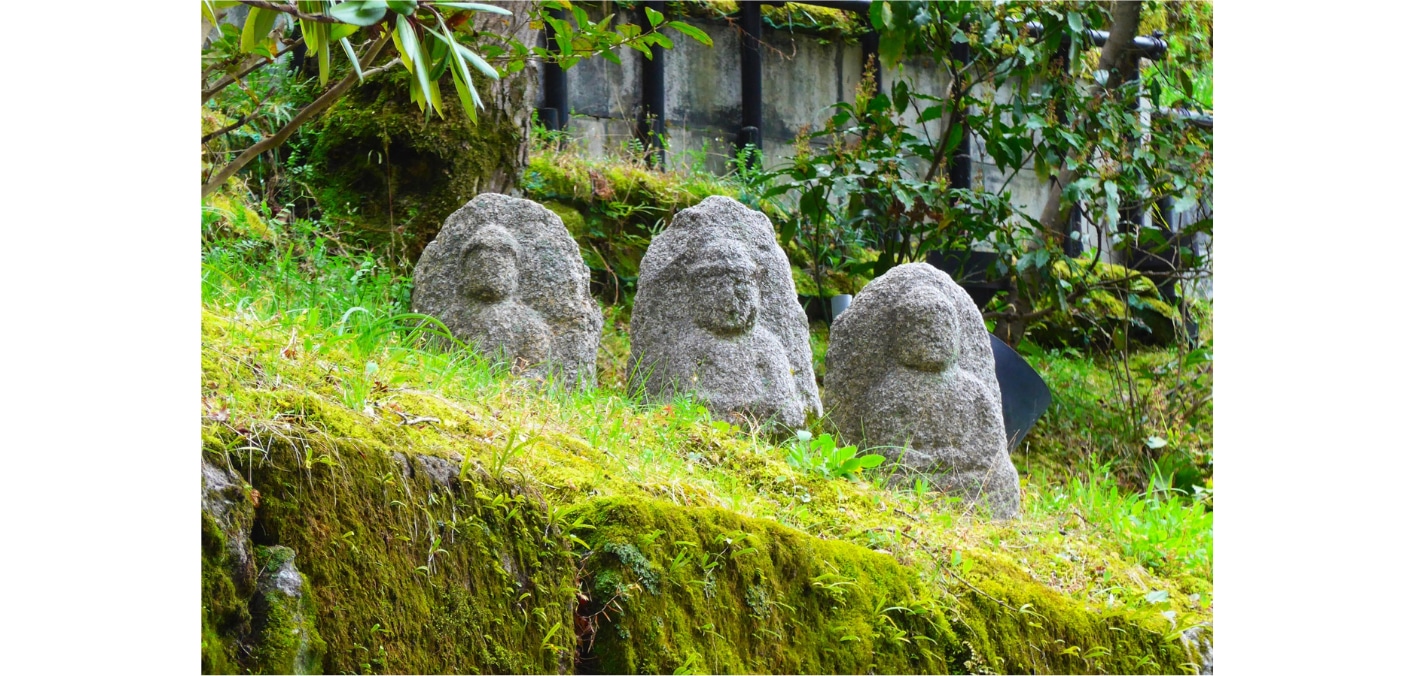
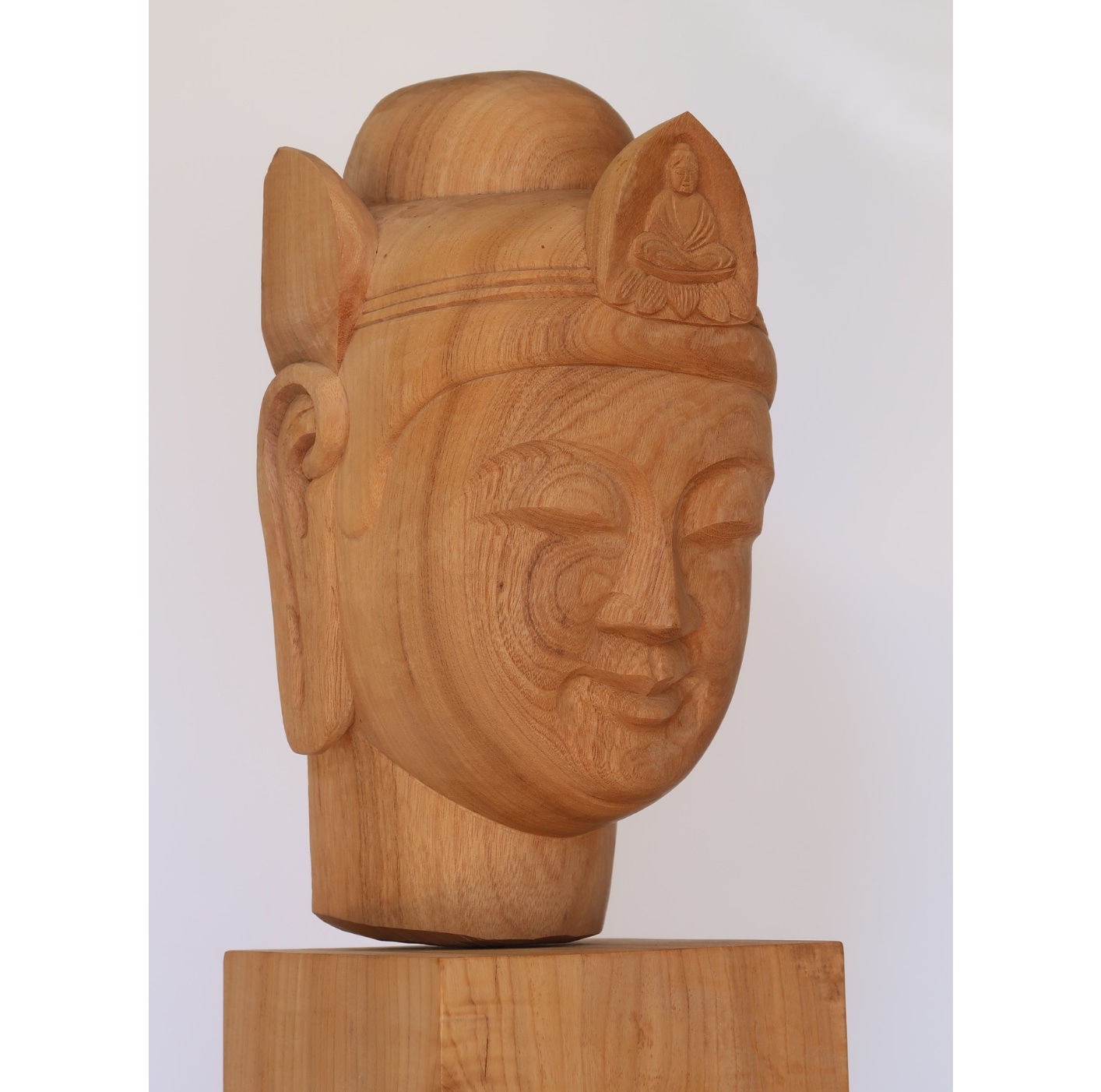
For many people outside Japan, the phrase Japanese Buddhist sculpture brings wooden statues to mind. That image is not wrong. Many of Japan's greatest Buddhist masterpieces, including those at Hōryū-ji and Tōdai-ji, were carved from wood. For Japanese woodcarvers, wood is more than a material. It has warmth, changes with time, and seems to possess a life of its own. Tessō Mori (1946–2024) devoted his life to woodcarving. From temple ornamentation and Buddhist sculpture to architectural carvings and original works, he carried forward Japan's long tradition of woodcarving. Although he deeply admired masterpieces such as the Baekje Kannon of Hōryū-ji, the contemplative Bodhisattva of Chūgū-ji, and the Four Heavenly Kings of Tōdai-ji, one Buddhist image remained especially close to his heart throughout his life. It was an ancient stone Bodhisattva from Korea's Silla Kingdom. Japan is often called a "culture of wood." Yet countless stone Buddhas quietly remain throughout the country. Along mountain paths, village roads, and old temples, they have endured centuries of wind, rain, and moss. Many are so weathered that their faces have almost disappeared. Even so, Japanese people continue to find beauty in them. It is the quiet beauty of time itself—an expression of the Japanese aesthetic of wabi-sabi. The sculpture that fascinated Tessō Mori most was not in Japan. It was one of the standing Bodhisattvas of the Samhwaryeong Buddhist Triad, created in 7th-century Silla and now preserved in the Gyeongju National Museum. Most visitors look first at the central figure. Mori did not. His attention was always drawn to the two standing Bodhisattvas. Their rounded, youthful faces. Their gentle smiles. Rather than expressing overwhelming authority, they seem quietly compassionate—as if standing beside the viewer rather than above them. That quiet humanity stayed with Mori throughout his life. Standing Bodhisattva from the Samhwaryeong Triad, 7th century, Silla Kingdom, Gyeongju National Museum According to family recollections, Mori admired this Bodhisattva from a young age, studying photographs of it in books on Korean Buddhist art. Its influence gradually appeared in his own work. Even before traveling to Korea, he had already carved wooden figures with similarly rounded faces and gentle expressions, including works inspired by the Buddhist monk-sculptor Enkū. His journey to Korea was therefore not a discovery, but a long-awaited meeting with a sculpture he had admired for decades. Standing before the original, he experienced something photographs could never convey. The quiet presence shaped by more than thirteen centuries. The unexpected warmth of carved granite. That impression stayed with him for the rest of his life. An Enkū-inspired sculpture by Tessō Mori, carved before his journey to Korea. Its gentle face already reflects his admiration for ancient Korean Buddhist sculpture. Years later, when Mori carved this Buddha head from Japanese camphor wood, he did not attempt to reproduce the Korean sculpture. The face became slightly more mature. The material changed from stone to wood. Yet the quiet gentleness that had remained in his heart endured. This is not a copy. It is Tessō Mori's own interpretation of the ancient Korean Bodhisattva. Admiration for Korean Buddhist sculpture met Japan's woodcarving tradition within a single artist. From that meeting, this work was born. The gentle spirit once carved in ancient stone found new life in Japanese camphor wood. One feature immediately draws attention. The eyes have not been carved. In Japanese Buddhist sculpture, the eyes are deeply significant. They symbolize wisdom, compassion, and spiritual life. When a statue is completed, priests perform the kaigen ("opening of the eyes") ceremony, giving it religious significance. For that reason, leaving the eyes uncarved is an extraordinary choice. Yet Mori deliberately did so. We can no longer ask him why. But there is a striking connection. The Korean Bodhisattva he admired throughout his life also appears to have no clearly carved eyes. Whether they disappeared through centuries of weathering or were never fully defined remains uncertain. What remains unmistakable is the expression. Without defined eyes, the face feels remarkably gentle. It neither stares nor speaks. It simply welcomes the viewer in silence. Perhaps this was what fascinated Mori. By leaving the eyes uncarved, he created space for each viewer to discover their own emotions. Compassion. Peace. Memory. Hope. There is no single correct interpretation. Japanese aesthetics often value suggestion over explanation. A weathered stone Buddha. A chipped tea bowl. The empty space in a sumi ink painting. Their beauty lies in what they leave unsaid. This Buddha head embodies the same spirit. Perhaps Mori himself would have offered only a simple explanation. "I just felt it was better." For him, woodcarving was never driven by theory alone. He trusted what he felt before the wood and gave that feeling form. Hand-carved approximately ten years ago from Japanese camphor wood, this Buddha head was inspired by the standing Bodhisattva of the Samhwaryeong Buddhist Triad. Rather than reproducing the original, Tessō Mori transformed decades of admiration into an original work of art shaped by his own artistic vision. Some Buddhist images speak through their eyes. This Buddha head speaks through silence. Inspired by the quiet beauty of an ancient Korean Bodhisattva and shaped by the hands of Japanese master woodcarver Tessō Mori, this original Buddha head reflects a lifelong pursuit of gentle expression, silence, and spiritual presence. 【View Artwork】 • The Art of Appreciating Buddha Heads • Maitreya Bodhisattva-The Quiet Smile and the Japanese Sense of Beauty • Baekje Kannon-The Ancient Buddhist Sculpture That Fascinated Tessō Mori •Why Is Japanese Wood Sculpture So Valuable? •Keepers of a Living TraditionThe Gentle Face of Ancient Korea
The Korean Stone Buddha That Inspired Tessō Mori Throughout His Life
The Bodhisattva That Captivated Mori
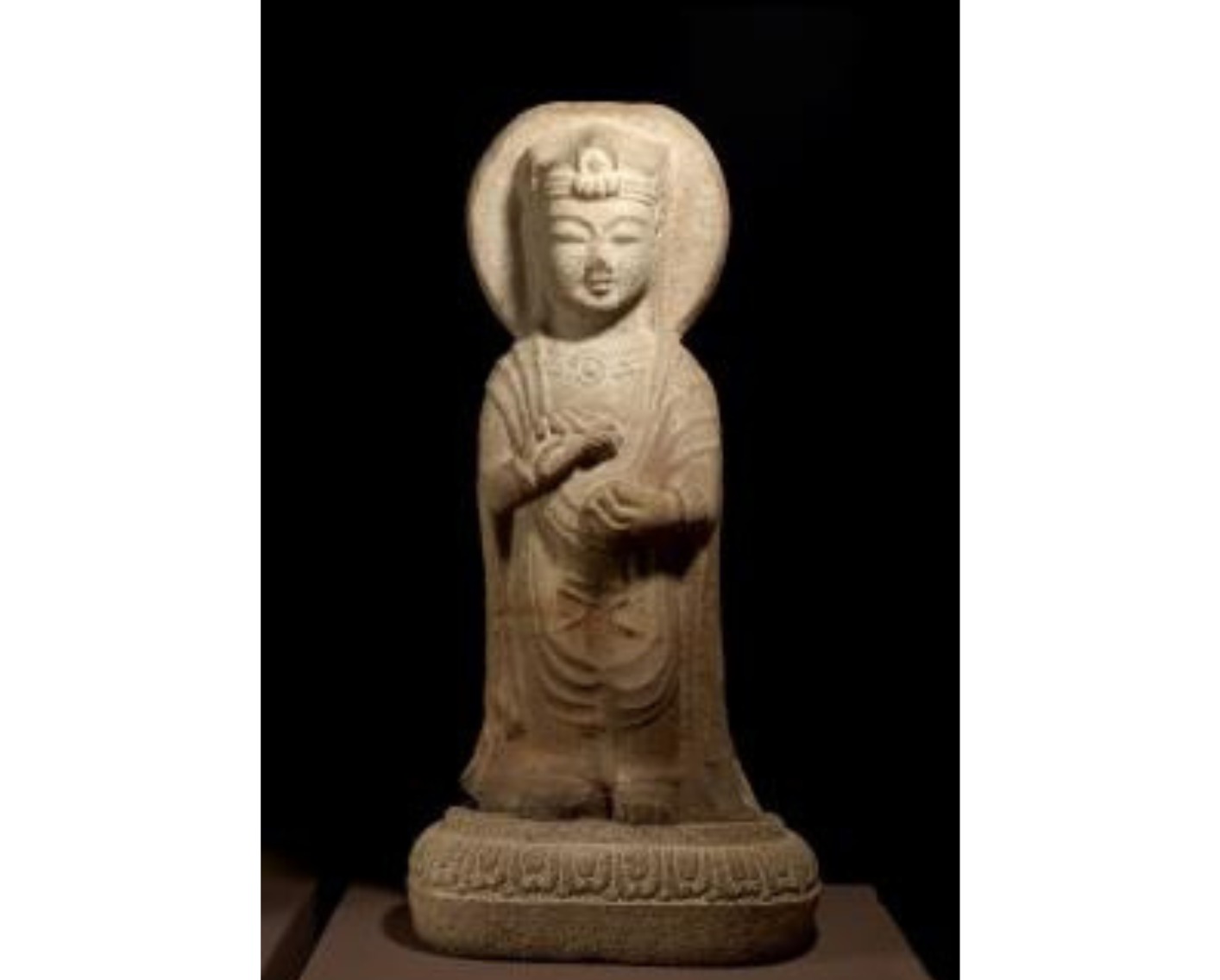
Source: National Heritage Portal (Stone Seated Maitreya Triad from Chang-gong valley, Namsan, Gyeongju) / KOGL Type 1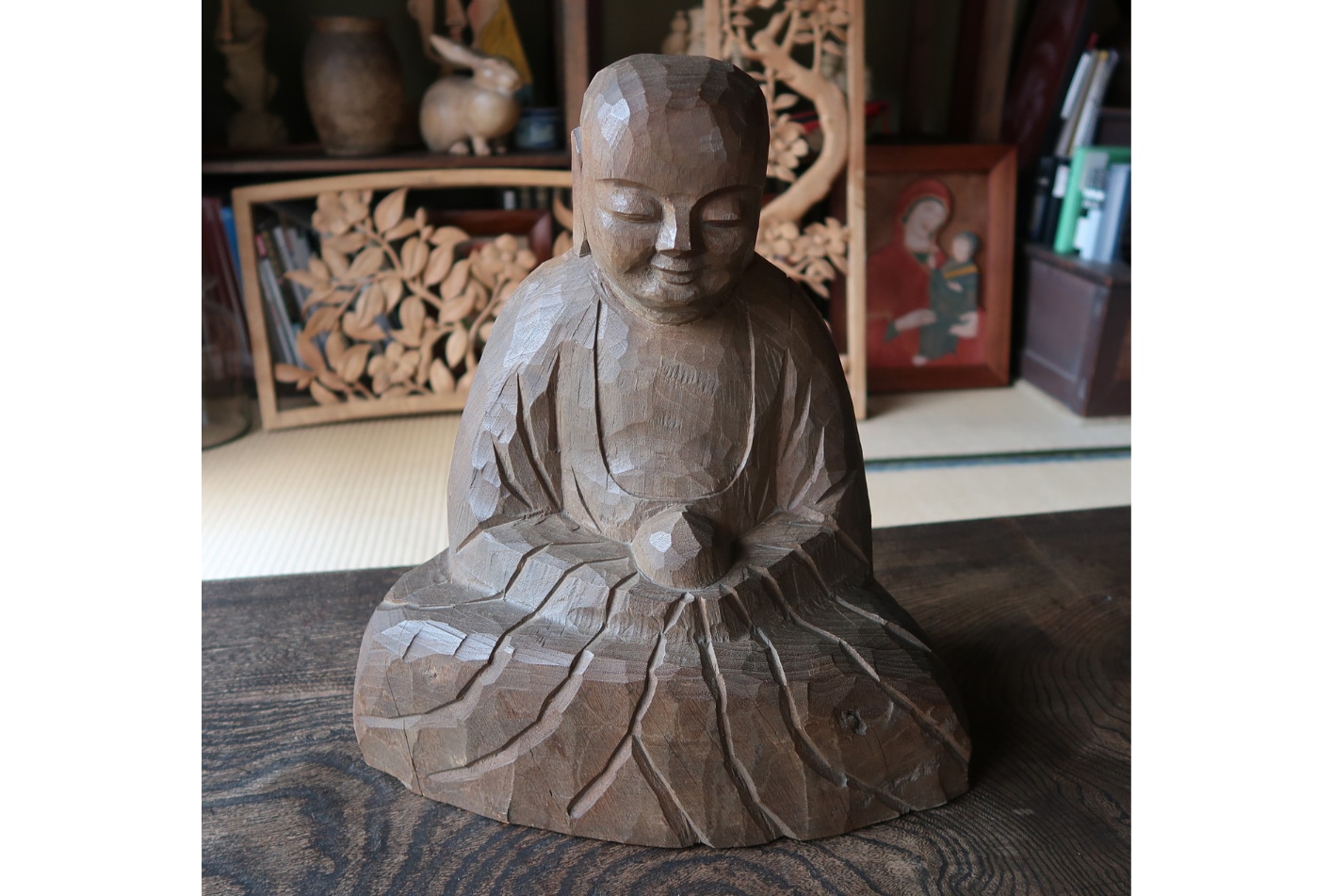
Why Are the Eyes Uncarved?
About This Artwork
Discover the Artwork
Related Reading