Blog
2026/06/16 16:59
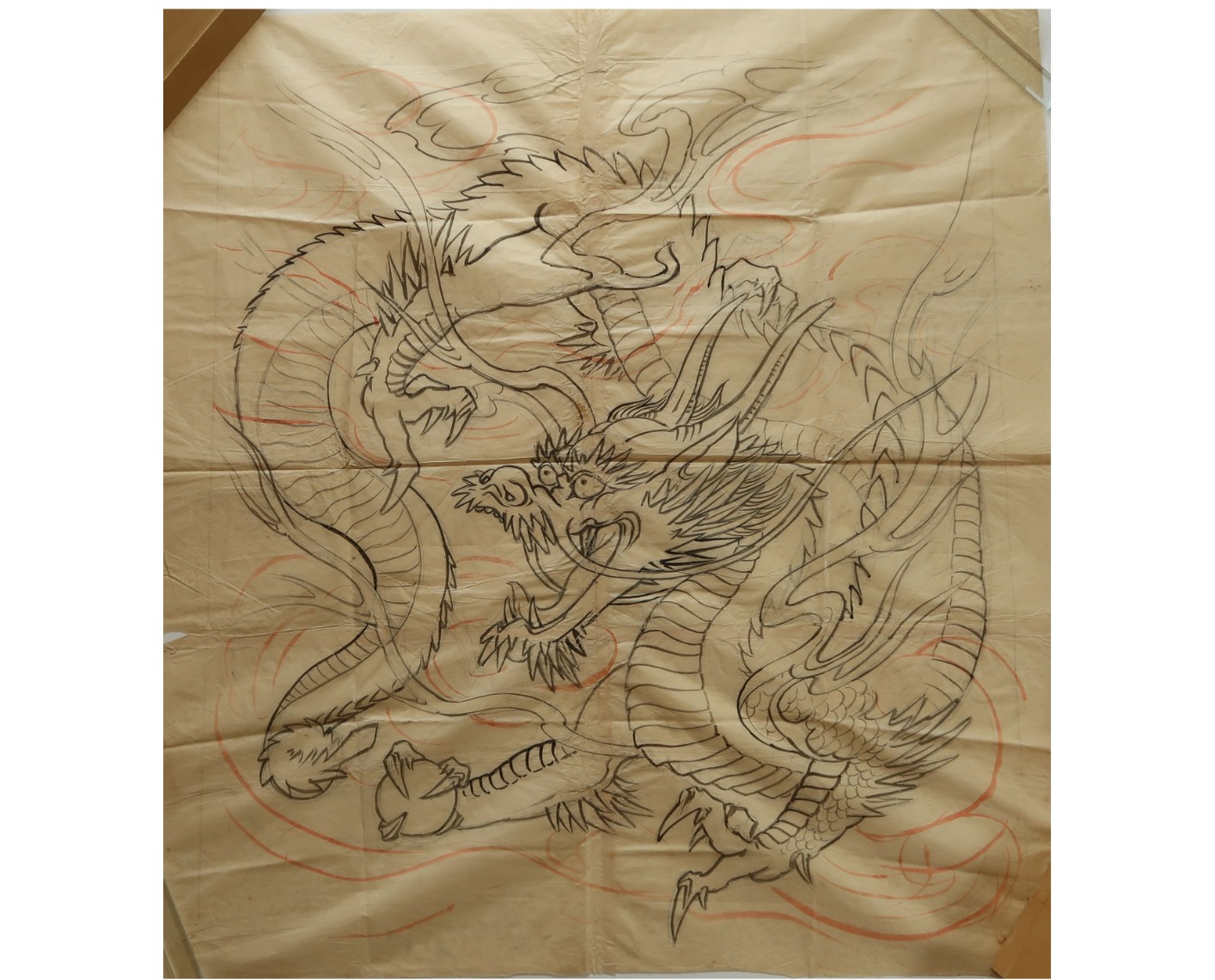
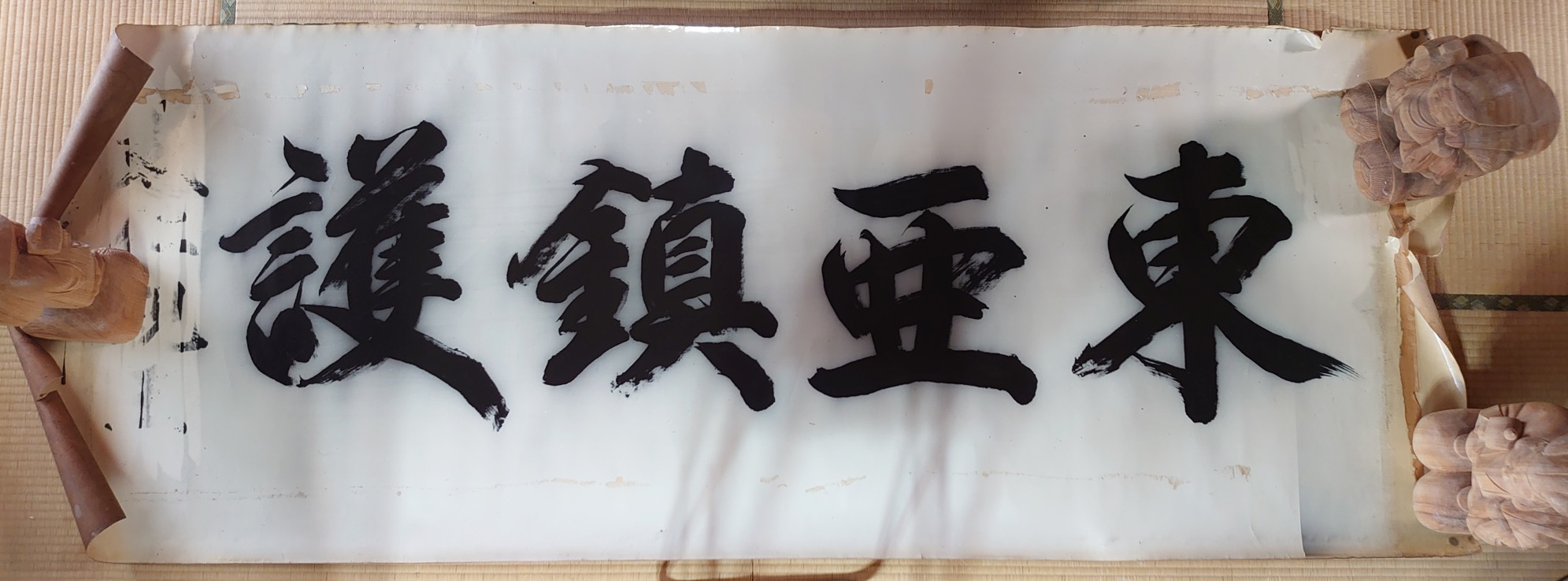
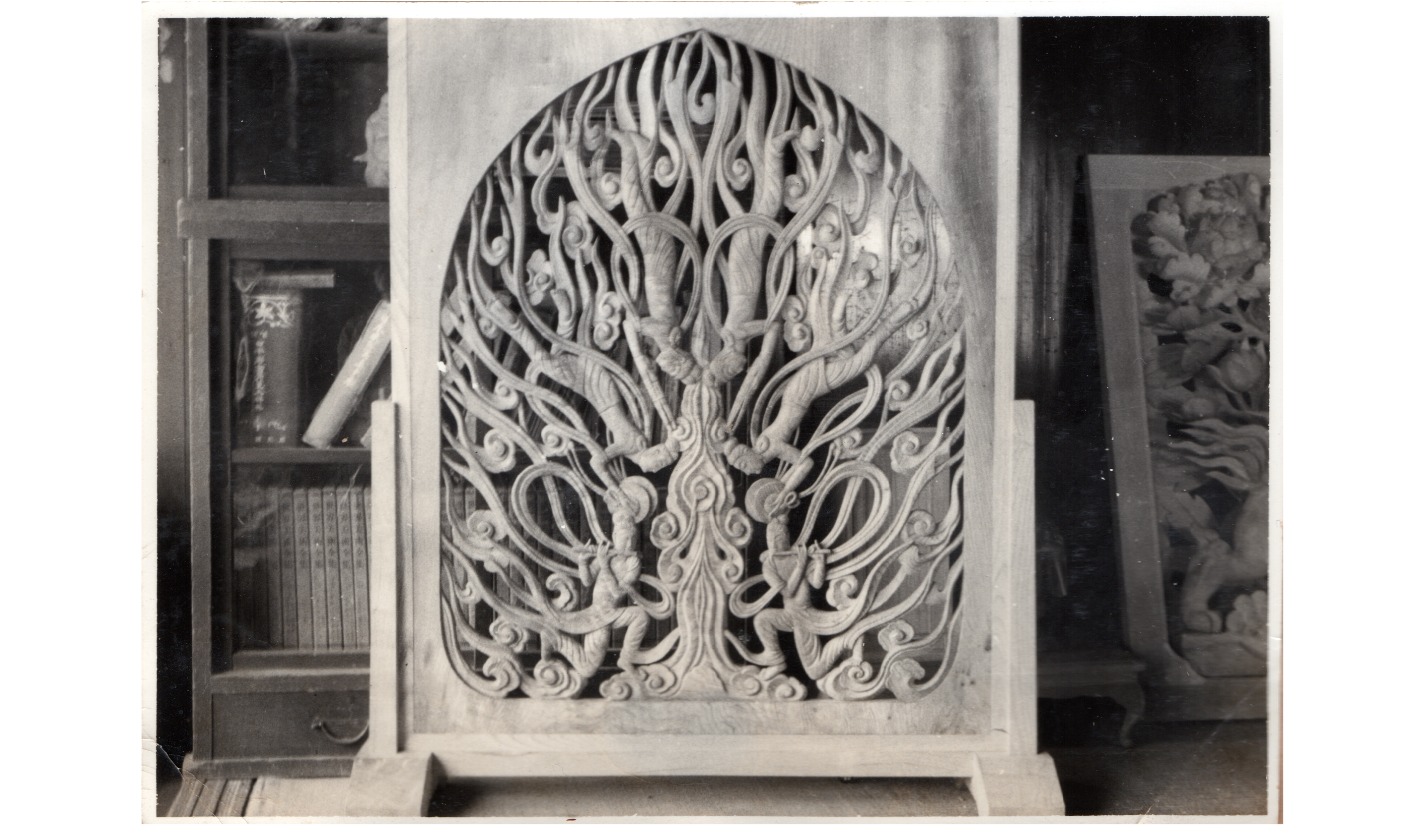
Original dragon design sketch drawn by Hideo Mori. Preserved in the Mori family archive. Although Hideo Mori earned his living as a woodcarver, many who knew him believed he possessed the soul of an artist. His ability to draw was exceptional. Family stories tell of painters and illustrators who admired his sketches and sought his help in creating designs. One episode from the wartime years illustrates this talent particularly well. While serving with the 19th Regiment in Tsuruga, Hideo received word that new carving commissions had arrived at his workshop. His apprentices could carve. But they could not draw. Without designs, the work could not begin. So the apprentices carried the actual blocks of wood all the way to Tsuruga and asked Hideo to create the designs. Without hesitation, he took up a brush and drew directly onto the wood freehand. Watching him work, a military officer reportedly remarked: “You’re doing remarkable work.” The comment was simple, yet it reflected the impression Hideo left on those who witnessed his talent. He was not merely a craftsman executing instructions. He was a creator. He could visualize forms before they existed and see finished sculptures within a block of timber long before anyone else could. His greatest gift was the rare combination of technical mastery and artistic imagination. Just as Hideo was building a successful career in Kyoto, Japan entered a period of war. The demand for woodcarving declined dramatically. Commissions became increasingly scarce. Eventually, maintaining a workshop in Kyoto was no longer possible. With little choice, Hideo returned to his hometown of Kaminyū, bringing several apprentices with him. The apprentices began producing practical wooden goods such as geta sandals and household items. Hideo himself turned to charcoal production to support his family. Life was not easy. Yet even during these difficult years, carving never disappeared from his life. Occasional commissions continued to arrive from Kyoto, and whenever work appeared, Hideo returned to his tools. No matter the circumstances, the artist within him never faded. Original calligraphy for the monumental “Tōa Chingo” plaque created for Dalian Shrine. Preserved in the Mori family archive. Among Hideo Mori's most remarkable achievements was the creation of a monumental wooden plaque for Dalian Shrine in what was then Japanese-controlled Manchuria. The plaque was enormous. According to family stories, transporting it by train was a challenge because there was barely enough clearance for it to pass through railway tunnels. After completing the work, Hideo personally traveled to Dalian. There he encountered an unexpected problem. The workers assigned to install the plaque high above the shrine gate refused to climb to such a dangerous height. Yet the work still had to be completed. So Hideo volunteered himself. Despite the disability in his right hand, he carried the massive plaque and climbed the structure to install it. The image remains unforgettable. A craftsman with an injured hand standing high above the ground, securing his own work because no one else was willing to do so. The story became one of the defining legends of the Mori family. It embodied everything that made Hideo who he was: Determination. Responsibility. And an unwavering commitment to finishing what he started. At one point in his life, Hideo contracted tuberculosis. Today, it is a treatable disease. In the early twentieth century, however, it was often considered life-threatening. Seeking treatment, he underwent an intense form of traditional moxibustion therapy. The procedure was painful and demanding. Yet Hideo endured it. Eventually, he recovered. Once again, hardship became another chapter in a life defined by resilience and perseverance. The years following the war remained difficult. Then a major opportunity appeared. The religious organization Sekai Kyūseikyō commissioned approximately one thousand carvings of Daikokuten, the deity of prosperity and good fortune. It was an enormous project. Hideo and his apprentices devoted themselves to completing the commission. The work provided vital support not only for his workshop but also for the woodcarving tradition of Kaminyū during a challenging period. The project also led to an important connection with a sculptor based in Kamakura. Impressed by Hideo's skill, the sculptor began entrusting him with a significant amount of work. Some of these commissions were what would be known as daisaku—substitute production. In other words, Hideo was the person who actually carved the works, while they were sold and presented under the Kamakura sculptor's name. Such arrangements were not uncommon at the time. Although the public rarely knew who had carved the pieces, they stand as a testament to the trust placed in Hideo's extraordinary ability. Even when his name did not appear, his craftsmanship lived within the work itself. As he grew older, Hideo gradually moved away from highly repetitive decorative carving. The truth was simple. He was increasingly drawn toward artistic expression. Temple transoms. Large sculptural reliefs. Decorative panels. Independent works of art. These were the projects that truly inspired him. Woodcarving inspired by the Suien finial of a Japanese pagoda. Collection of the Mori family. ────────── Nearby lived Daizō Mori, a childhood friend who would later become a professional sculptor and graduate of Tokyo University of the Arts. The two maintained a lifelong friendship and exchanged letters for many years. Unlike Hideo, Daizō had opportunities that made a career as a fine artist possible. Hideo did not. He had a family to support. Employees to guide. Responsibilities to fulfill. Art alone could not sustain those obligations. Years later, his second son, Nozomu Mori, reflected: “I think my father wanted to be an artist rather than simply a craftsman.” Looking at Hideo's drawings, carvings, and lifelong pursuit of beauty, it is difficult to disagree. Hideo Mori passed away in December 1964. He left behind no museum. No great fortune. No large company. What he left instead was something far more enduring. His techniques. His designs. His courage. His independence. His pursuit of beauty. And the spirit of a man who refused to follow conventional paths. His second son, Nozomu Mori, would become one of Japan's great all-round master carvers. His third son, Tetsō Mori, would go on to establish Mori Carving Studio and carry the family tradition into a new era. The generations that followed would continue building upon the foundation he created. In that sense, the story of Mori Carving Studio does not begin with a workshop. It begins with a stubborn left-handed craftsman who lost a finger, refused to surrender to circumstance, and spent his life searching for beauty within wood. And even today, every carving that emerges from Mori Carving Studio carries something of that spirit. More than sixty years after his passing, the legacy of Hideo Mori continues to live on through the hands of the generations he inspired.THE LEFT-HANDED REBEL
Part II — Artist, War, and Legacy
An Artist Living Inside a Craftsman
War and Returning Home
The Giant Plaque of Dalian Shrine
Enduring Illness
One Thousand Daikokuten
The Craftsman Who Wanted to Be an Artist
A Legacy That Endures