Blog
2026/06/11 11:45
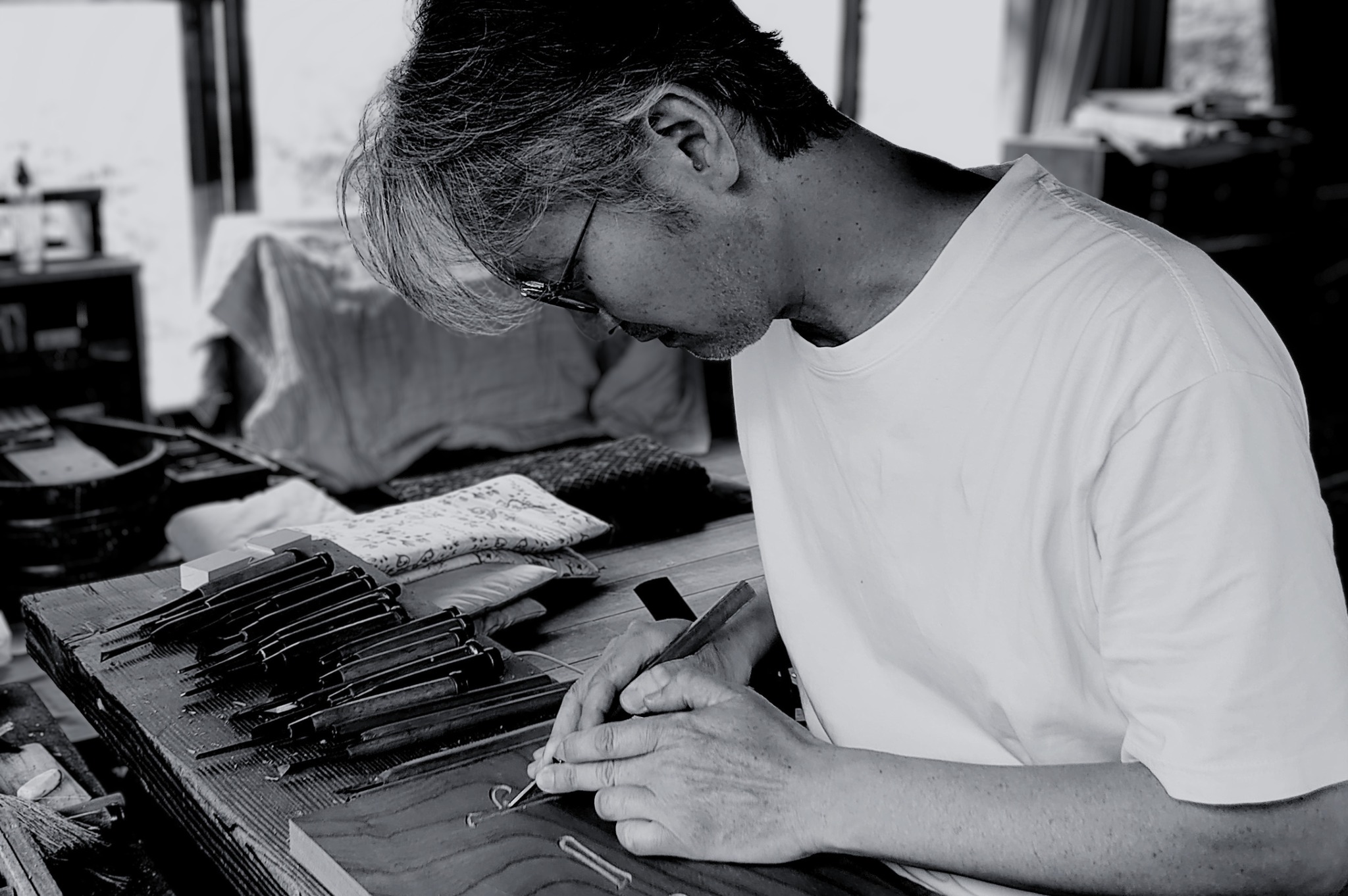
Born in 1974, Yasuichirou Mori is the current head of Mori Carving Studio and a Government-Certified Traditional Craftsman of Japan. As the third generation of the Mori family lineage, he stands at the intersection of tradition and continuity, carrying forward a heritage of Japanese woodcarving that has been cultivated over generations. Yet unlike many artisans who speak passionately about personal artistic vision, Yasuichirou approaches his work from a different perspective. When asked about himself during this interview, he paused for a moment and replied with a smile: "To be honest, I've never really spent much time thinking about myself." The answer reveals much about his character. Rather than focusing on personal recognition, Yasuichirou's attention naturally turns toward the work itself, the people around him, and the clients who place their trust in the studio. His journey into woodcarving was not entirely straightforward. After graduating from an art junior college, he entered the workforce and took a position at a conventional company. Yet it did not take long for him to realize that the path was not the right one for him. Around that time, his younger brother, Tetsuo, had already begun training as a woodcarver under their father, Tessō Mori, and their uncle, Nozomu Mori. Watching his brother's apprenticeship, Yasuichirou came to a simple realization. "Perhaps I can do this too." With that thought, he left the company and entered the world of traditional woodcarving under the guidance of his father and uncle. What began as a practical decision gradually became a lifelong vocation. Over the decades that followed, Yasuichirou mastered a remarkably wide range of work. From Buddhist altar ornamentation and Buddhist ritual implements to temple carvings, architectural decoration, relief sculptures, animal carvings, and even hand-carved signboards, he developed the versatility expected of a traditional Japanese craftsman. When asked which field he considers his specialty, however, he offers a surprising answer. "I don't really have one." For Yasuichirou, the role of a craftsman is not to pursue a preferred category of work but to respond faithfully to whatever is entrusted to him. Whether the commission is large or small, sacred or practical, he believes the responsibility remains the same: to complete the work to the highest standard possible. The greatest satisfaction, he says, comes not from the carving itself, but from the reaction of the client. When asked which work he considers his finest achievement, he struggles to name a particular piece. "That depends on the customer," he explains. "If they are happy with the work, then I feel it was a good piece." This quiet humility has become one of the defining characteristics of his career. His craftsmanship was formally recognized in 2010 when he was awarded the title of Government-Certified Traditional Craftsman in the Hikone Butsudan tradition, one of Japan's most distinguished forms of Buddhist altar craftsmanship. Yet for Yasuichirou, traditional craftsmanship has never been limited to woodcarving alone. As a member of the Hikone Butsudan Traditional Craftsmen Association's youth division, he worked closely with artisans specializing in lacquer, gold leaf, maki-e decoration, wood joinery, and other traditional disciplines. These experiences broadened his understanding of how individual skills come together to create a complete work of art. This collaborative spirit continues to shape his approach today. Among the most significant projects of his career was the restoration of the Ryūto, the magnificent Dragon Head mounted on the Ōfune-hoko float of Kyoto's world-famous Gion Festival. Working alongside his father, Tessō Mori, Yasuichirou was entrusted with important finishing stages of the carving. As both father and son pursued perfection, disagreements were inevitable. They argued, challenged each other's ideas, and pushed the work further than either might have alone. What could have been conflict instead became creative energy. The completed Dragon Head stands today as both a masterwork of traditional carving and a symbol of a family's shared dedication to excellence. Those who know Yasuichirou often describe him as calm, optimistic, and considerate. Unlike his younger brother Tetsuo, who tends to speak directly and candidly, Yasuichirou carefully considers the feelings of others before speaking. He has a natural ability to maintain relationships, build trust, and bring people together. These qualities have become increasingly important as he has assumed leadership of Mori Carving Studio. His personal motto is a classic Japanese phrase: Onko Chishin — "Learn from the past to create the future." The words reflect his view of tradition itself. For Yasuichirou, preserving tradition does not mean simply repeating what previous generations have done. It means understanding the wisdom of the past deeply enough to carry it forward into the future. Today, as both craftsman and studio representative, he continues to balance the responsibilities of production, client relationships, and the stewardship of a family legacy. He may not spend much time thinking about himself. Instead, his attention remains where it has always been: on the work that needs to be done, the people who rely upon him, and the tradition entrusted to his care. Through this quiet dedication, Yasuichirou Mori continues to ensure that the living tradition of Japanese woodcarving remains vibrant for generations yet to come.THE QUIET STEWARD
Yasuichirou Mori and the Responsibility of Carrying Tradition Forward